Keeping your chimney in good shape is key for home safety. A well-kept chimney keeps your home safe from fires and other dangers. Regular checks and quick DIY repairs can avoid expensive problems later.
As a homeowner, knowing the value of chimney maintenance is crucial. Weather can damage your chimney over time. This guide will show you how to fix common problems, what tools you need, and how to stay safe.
This guide will help you spot and fix issues, keeping your home safe and working well. It’s perfect for both newbies and seasoned DIYers. Follow along to make your Repair your Chimney journey easier.
The Importance of Chimney Maintenance for Home Safety
Keeping your chimney in good shape is key to home safety. It makes sure your heating system works right. This reduces accident risks and keeps your home air clean.
Fire Prevention Benefits
Fire prevention is a big reason for chimney upkeep. Creosote buildup and damaged chimneys can cause fires. These fires can spread fast. Regular checks and cleanings spot problems early. For more fire safety tips, check the EPA’s Burn Wise program, which educates homeowners on safe wood-burning practices.
Structural Integrity Considerations
Chimney care also means checking for damage. Cracks in mortar or broken flashing can harm your chimney and house. Fixing these issues quickly saves you from bigger, more expensive problems later.
Energy Efficiency Advantages
A well-kept chimney means your heating system works better. This can save you money on energy. A clean chimney also helps the environment by using less energy. Maintaining a clean, sealed chimney improves air quality and heating efficiency. See energy.gov’s home heating tips for more insights.
| Maintenance Aspect | Benefits |
|---|---|
| Fire Prevention | Reduces risk of chimney fires |
| Structural Integrity | Prevents costly repairs |
| Energy Efficiency | Lowers energy bills |
Identifying Common Signs to Repair your Chimney
Homeowners should watch for signs that their chimney needs fixing. Regular checks and knowing what to look for can stop accidents. It also keeps your chimney working well for years.
Visible Exterior Damage
One clear sign is damage you can see outside. Look for cracked or crumbling bricks, rusty flashing, or a broken chimney cap. Regular checks can spot these problems early.
Interior Warning Signs
Don’t ignore signs inside your home either. Watch for water stains on walls or ceilings near the chimney, strange smells, or white spots on the brick. These signs mean there might be leaks or other problems.
Seasonal Inspection Checklist
Seasonal checks are key to keeping your chimney in good shape. Here’s a checklist to help you find issues:
| Inspection Area | Potential Issues |
|---|---|
| Chimney Exterior | Cracks in bricks or mortar, rusty flashing, damaged chimney cap |
| Interior Near Chimney | Water stains, unusual odors, soot or creosote buildup |
| Chimney Crown and Flashing | Cracks in the crown, damaged or missing flashing |
By being proactive and checking your chimney seasonally, you can find problems early. This keeps your chimney safe and working right.
Essential Tools and Materials for DIY Chimney Repair
Starting a DIY chimney repair project needs the right tools and materials. Having everything ready from the start saves time and avoids frustration. It makes the repair process smoother.
Basic Tool Requirements
You’ll first need basic tools found in many DIY kits. These include:
- Trowels for applying and smoothing mortar
- Hammers and chisels for removing damaged mortar and bricks
- Safety glasses and work gloves for protecting yourself from debris
- Ladders for accessing the chimney
Specialized Chimney Repair Equipment
Some specialized tools can make the job easier and more efficient. These include:
- A grinder with a masonry wheel for smoothing surfaces
- A masonry brush for cleaning the chimney
- A sprayer for applying waterproofing treatments
- A shop vac for cleaning up debris
Materials Shopping List
You’ll also need the right materials for the repair. This includes:
- Type N mortar mix for rebuilding mortar joints
- Bricks or stones to replace damaged ones
- Waterproofing agent to protect the chimney from water damage
Where to Find Chimney Repair Supplies
You can find the tools and materials at local hardware stores, home improvement centers, or online. Make sure to pick products that fit your chimney type and repair needs.
Safety Precautions Before Climbing the Roof
When you’re fixing your chimney, safety comes first. Climbing the roof can be risky. But, being prepared can help avoid accidents.
Proper Ladder Setup and Usage
A strong ladder is key for safe roof access. Make sure it’s on a solid, flat ground. Having someone hold it can help too. Always keep three points of contact, like two hands and one foot.
Personal Protective Equipment
Wearing the right gear is important. Gloves help you grip and protect your hands. Safety glasses keep your eyes safe from debris. A hard hat guards against falling objects.
Weather Considerations
Check the weather before you start. Don’t work in rain, ice, or wind. These conditions make the roof slippery and increase fall risks.
Electrical Safety Near Chimneys
Watch out for electrical wires near your chimney. Keep a safe distance from power lines. If possible, turn off the power near electrical parts.
| Safety Measure | Description | Importance Level |
|---|---|---|
| Proper Ladder Setup | Ensure ladder is on a firm surface and consider having it held. | High |
| Personal Protective Equipment | Wear gloves, safety glasses, and a hard hat. | High |
| Weather Check | Avoid working in adverse weather conditions. | High |
| Electrical Safety | Be aware of and keep distance from electrical wires and components. | High |
By taking these safety steps, you can lower risks and do a good DIY chimney repair.
Chimney Cleaning Essentials Before Repairs
Before you start fixing your chimney, make sure to clean it well. This ensures a safe and effective repair. Cleaning removes creosote and soot, which can be dangerous if not removed.
Why Cleaning Before Repair Matters
Cleaning your chimney before repairs is key for a few reasons. It gets rid of dangerous materials that could catch fire during repairs. It also lets you see the chimney’s condition clearly, helping with more precise repairs.o find highly rated services in your area, browse reviews on Yelp for Pittsburgh chimney repair.
DIY Chimney Cleaning Methods
There are many DIY ways to clean your chimney, including:
- Using a chimney brush to scrub away creosote and soot
- Vacuuming the chimney to remove debris
- Utilizing specialized cleaning products designed for chimneys
Dealing with Creosote Buildup
Creosote buildup is common in chimneys, especially when burning wood. To tackle it, use a chimney brush made for removing creosote. Regular cleaning helps avoid dangerous buildup.
How to Repair Chimney at Home: Tuckpointing Basics
Fixing your chimney at home is doable if you know the basics of tuckpointing. It’s about taking out old mortar and putting in new one. This keeps your chimney strong.
Identifying Mortar Damage
First, find where the mortar is broken. Look for cracks, gaps, or color changes in the mortar lines. Spotting damage early helps avoid bigger problems.
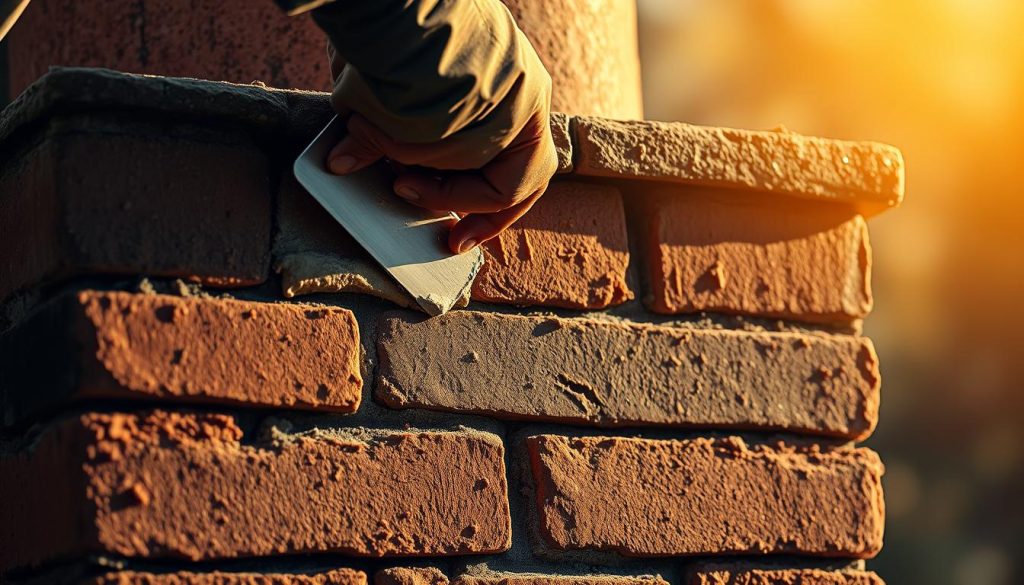
Removing Damaged Mortar
To remove bad mortar, use a special tool or a cold chisel. Be careful not to hurt the bricks around it.
Mixing Replacement Mortar
It’s important to mix the mortar right. It should match the old mortar in color and texture. A well-mixed mortar is key to a good tuckpointing job.
| Component | Ratio | Description |
|---|---|---|
| Cement | 1 part | Binds the mortar together |
| Lime | 1 part | Improves workability and flexibility |
| Sand | 6 parts | Provides bulk and helps with drainage |
Applying New Mortar Between Bricks
Put the mixed mortar into the gaps and press it in well. Use a pointing trowel to smooth out the joints.
Finishing and Curing Process
Let the new mortar dry after applying it. Keep it wet to stop it from cracking. Right curing is key for lasting results.
By sticking to these tuckpointing basics, homeowners can fix their chimneys well. This improves both safety and looks.
Waterproofing Your Chimney: Sealing Techniques for Beginners
A well-maintained chimney works better and lasts longer. It needs regular waterproofing to avoid damage. This means applying a waterproofing agent to the chimney’s surface. It’s key to stop water leaks and prevent structural problems.You can also explore trusted local pros through Angi’s chimney repair listings.
Choosing the Right Waterproofing Products
Choosing the right waterproofing products is crucial. Look for ones made for chimneys. They should be durable and fit your chimney’s material. Silicone-based sealants are great because they work well and are easy to use.
Surface Preparation Steps
Before you apply any waterproofing agent, clean the chimney. Remove dirt, debris, or old sealants. Use a wire brush to scrub off tough grime. This makes sure the surface is clean for the new sealant.
Application Methods
The way you apply the waterproofing agent depends on the product. You might use a brush or spray. Always follow the manufacturer’s instructions for the best results.
Drying and Testing for Leaks
Let the sealant dry completely after application. Wait the time recommended by the manufacturer. Once dry, test the chimney for leaks. Use rainfall simulation or a hose to spray water on it. Look for any signs of water getting in.
Step-by-Step Chimney Crown Repair
The chimney crown is key to keeping your chimney safe from water damage. You can fix it yourself. A broken crown can cause leaks and harm the structure, so fixing it fast is important.
Assessing Crown Damage
First, check how bad the damage is. Look for cracks, crumbling mortar, or water signs. Regular checks can spot problems early, stopping bigger issues.
Preparing the Crown Surface
After checking the damage, clean the area. Remove dirt or loose bits. Make sure it’s dry and ready for repair. Good prep is essential for a good fix.
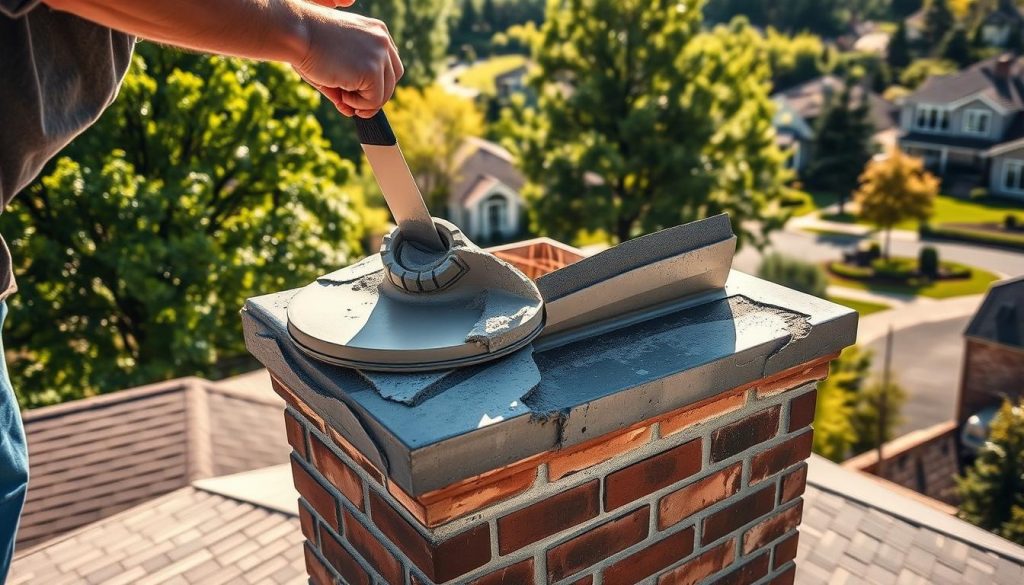
Applying Crown Repair Material
Now, put on the repair material. Pick a good one for your chimney and follow the directions. Doing it right keeps your chimney strong.
Curing and Protection Techniques
Let the material dry as told. The drying time depends on the product. Also, add a protective coat to make it last longer.
By following these steps, you can fix your chimney crown well. Regular care and quick fixes keep your chimney in top shape.
Chimney Cap and Flashing Repair Guide
The chimney cap and flashing are key parts that need regular checks and upkeep. This ensures your chimney works well and safely.
A good chimney cap keeps out debris and animals. The flashing stops water from getting into your home. Damage to these parts can cause expensive fixes.
Removing and Replacing a Damaged Chimney Cap
To fix a broken chimney cap, start by taking off the old one. Make a note of any fasteners or special installation details. Then, look for any damage or debris.
Next, put on a new cap. Make sure it’s fastened well to keep it in place through weather.
Repairing Chimney Flashing
Flashing repair means checking the flashing for any damage or gaps. If it’s damaged, remove the old flashing and replace it with new material. This ensures a tight seal around the chimney.
Sealing Joints Around Flashing
After fixing or installing flashing, seal the joints to stop water from getting in. Use a good sealant for outdoor use and follow the maker’s instructions.
By doing these steps, you can fix your chimney cap and flashing. This protects your home from water damage and keeps your chimney safe and efficient.
When to Call a Professional: Recognizing Advanced Chimney Problems
Knowing when to call a professional for chimney repairs is key for home safety. DIY fixes can save money on small issues. But, some problems need a skilled chimney specialist.
Structural Issues Beyond DIY Scope
Big structural damage to your chimney means you need a pro. Look for cracks in the stack, a chimney that’s tilting, or bad mortar. These problems can make your chimney unsafe and need expert care.
Liner Damage Indicators
Liner damage is serious and often needs a pro. Watch for cracks, wear, or liner parts that are out of place. A bad liner can let carbon monoxide into your home, which is very dangerous.
Finding a Qualified Chimney Specialist
When looking for a chimney repair expert, find ones certified by groups like the Chimney Safety Institute of America (CSIA) or the National Chimney Sweep Guild (NCSG).
Cost Comparison: DIY vs. Professional Repair
Professional repairs might cost more at first, but they save money in the long run. They prevent more damage and ensure the job is done right. Think about the cost of materials and your time for DIY versus hiring a pro. To compare professional pricing, check HomeAdvisor’s chimney repair cost guide.
Conclusion: Ensuring Your Chimney Is Safe to Use
After fixing your chimney, it’s key to check it over to make sure it’s safe. A post-repair checklist helps confirm all repairs were done right. Look for any damage, check if all repairs are sealed well, and test how the chimney works.
To keep your chimney safe, look at the cap, flashing, and crown for damage or wear. Make sure all joints are sealed and the chimney works right. This way, you’ll have a safe and efficient way to heat your home.
Ensuring chimney safety is a job that never ends. You need to keep up with regular checks and upkeep. This way, you can avoid dangers and make sure your chimney stays safe and works well.