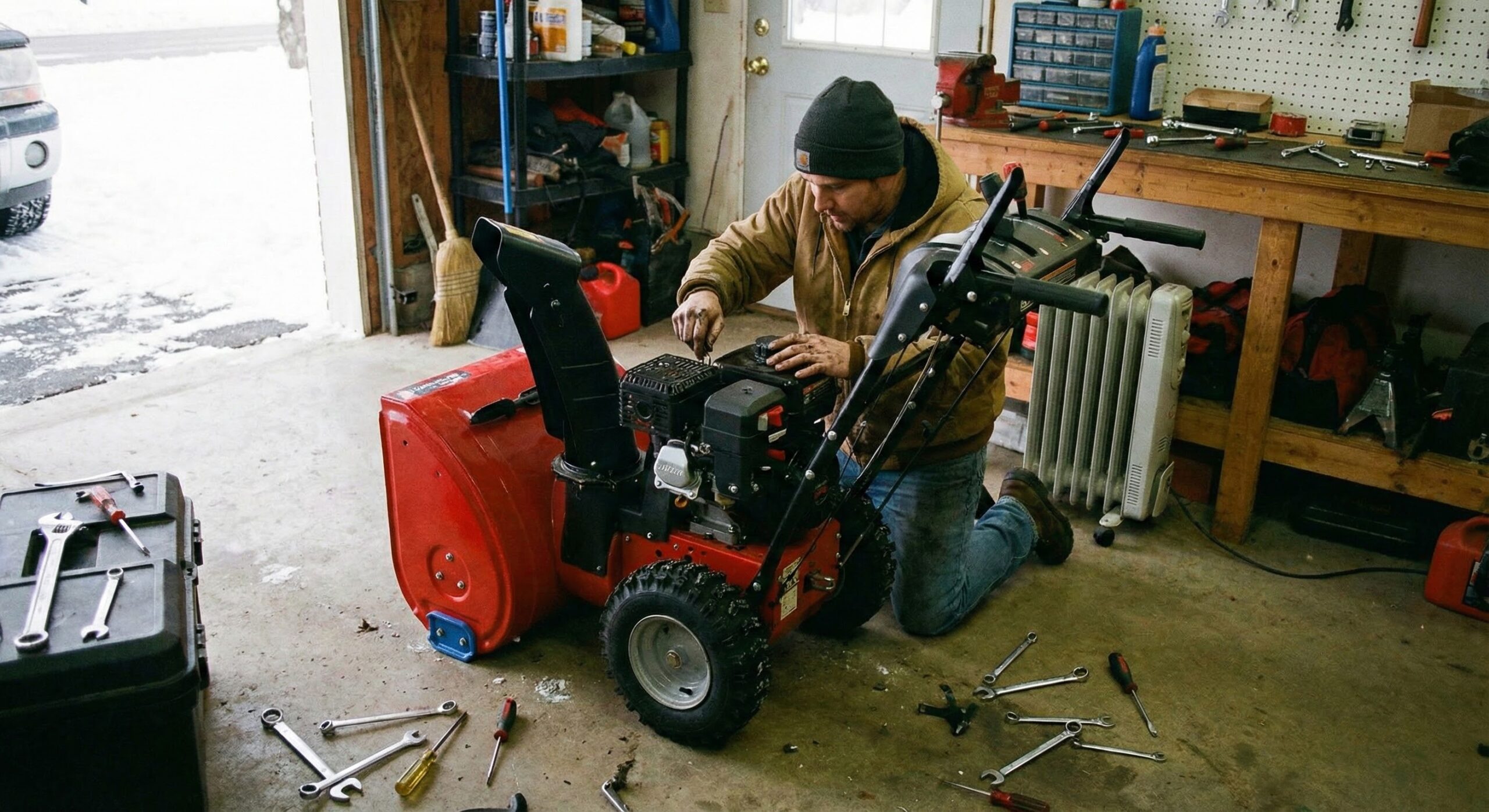
In many regions of the United States, winter means heavy snowfall, and a snow blower becomes an essential machine rather than a luxury. But when it refuses to start or stops working in the middle of a storm, the situation can quickly turn stressful. This guide explains the most common snow blower problems, simple fixes you can try at home, and when it is better to call a professional.
Snow Blower Won’t Start
One of the most frequent issues is a snow blower that simply won’t start. In most cases, the culprit is old or contaminated fuel. If the machine has been sitting unused for months, the fuel may have degraded and blocked proper combustion.
What to do:
- Drain the old fuel completely
- Refill with fresh gasoline
- Inspect the spark plug and replace it if it looks dirty, corroded, or damaged
A faulty spark plug alone can prevent the engine from firing, even if everything else is in good condition.
Snow Blower Not Throwing Snow
If the engine runs but snow is not being thrown properly, the issue usually lies in the auger or impeller system.
Possible causes include:
- Ice buildup or debris stuck inside the auger
- A loose, worn, or broken drive belt
Solution:
Always turn off the machine and disconnect the power before cleaning. Remove ice, sticks, or packed snow from the auger area. Check the drive belt and replace it if you notice cracks or slackness.
Snow Blower Shuts Off by Itself
A snow blower that starts but shuts off unexpectedly is often suffering from restricted airflow or fuel flow.
Common reasons:
- Dirty air filter
- Clogged carburetor
Fix:
Clean or replace the air filter to restore proper airflow. If the machine has been unused for a long time, carburetor cleaning may be necessary to remove varnish and fuel residue.
Importance of Regular Snow Blower Maintenance
Routine maintenance greatly increases the lifespan of your snow blower and reduces sudden breakdowns during peak winter conditions.
Before every season, you should:
- Change the engine oil
- Tighten all nuts and bolts
- Lubricate moving parts
- Inspect belts, cables, and spark plugs
After use, store the snow blower in a dry and sheltered location to prevent rust and moisture damage.
When to Call a Professional Repair Service
If basic troubleshooting does not resolve the problem, it is best to seek professional snow blower repair services. Engine, transmission, or electrical issues require specialized tools and expertise. Attempting complex repairs without proper knowledge can worsen the damage and increase repair costs.
Final Thoughts
Timely snow blower repair and seasonal maintenance ensure reliable performance when you need it most. A well-maintained machine saves time, effort, and frustration during harsh winter weather and keeps your driveway clear without interruptions.