Keeping your heating, ventilation, and air conditioning (HVAC) system working is key for your employees’ and customers’ comfort. It’s not just a nice-to-have; it’s a must-have for your business to run smoothly.
The cost to keep or repair an HVAC system can change a lot. It depends on your building’s size and the HVAC type. On average, you might spend between $5,000 to $30,000 or more for a new one.
Knowing what affects HVAC repair costs is vital for planning your budget. This guide will help you understand what to expect in 2025. It also offers tips on keeping your system in top shape.
Understanding Commercial HVAC Systems and Their Business Impact
A well-working commercial HVAC system is key for businesses to run smoothly. Getting it fixed is a big part of keeping things running well.
What Is Commercial HVAC Repair and Why It’s Critical
Commercial HVAC repair means fixing heating, ventilation, and air conditioning systems in big buildings. It’s very important because a broken system can make people uncomfortable. It can also lower productivity and cause health problems.
Keeping the system in good shape helps keep everyone comfortable and healthy inside.
How HVAC Downtime Affects Business Operations
HVAC downtime can really hurt a business. If the system breaks, it can make the workplace too hot or cold. This might even force a business to close for a while.
This downtime can cause lost work, money, and unhappy customers. Quick commercial HVAC repair helps avoid these problems.
Key Differences Between Commercial and Residential Systems
Types of commercial HVAC systems are much bigger and more complex than home systems. They handle bigger spaces and need more powerful equipment. Knowing these differences helps business owners get the right service for their needs.
2025 Commercial HVAC Repair Cost Overview
Commercial HVAC repair costs in 2025 will change based on several key factors. It’s important for businesses to understand these costs. This helps them plan their budgets for heating, ventilation, and air conditioning maintenance.
Average Commercial HVAC Repair Costs in the USA
The average cost of HVAC repair in the USA is $293, but it’s a good idea to use an HVAC repair cost calculator for an accurate estimate. Costs can range from $75 to $2,900. This wide range is because of the different complexities of repairs and the equipment types.
Average Repair Costs:
- Simple repairs: $75-$200
- Complex repairs: $200-$1,000
- Major component replacements: $1,000-$2,900
Regional Price Variations Across States
Prices vary by region due to labor costs, local rules, and cost of living. For example, states with higher labor costs have more expensive HVAC repairs.
| Region | Average Cost | Cost Range |
|---|---|---|
| Northeast | $350 | $150-$1,500 |
| South | $280 | $100-$1,200 |
| West Coast | $320 | $120-$1,800 |
2025 Cost Trends and Inflation Factors
In 2025, HVAC repair costs will be affected by inflation, supply chain issues, and new technologies. Businesses should get ready for possible cost hikes.
Key Factors Influencing 2025 Costs:
- Inflation rates
- Supply chain disruptions
- Technological advancements
Factors That Influence Commercial HVAC Repair Pricing
Many factors affect the cost of commercial HVAC repairs. Knowing these can help businesses plan better and make smart choices about their HVAC systems.
System Size and Complexity
The size and complexity of a commercial HVAC system greatly impact repair costs. Larger, more complex systems need more extensive repairs, raising costs. Complex systems have many parts, making diagnosis and repair harder and longer.
Equipment Age and Condition
The age and condition of HVAC equipment are key in determining repair costs. Older equipment often needs more maintenance and repairs, increasing costs. Following HVAC maintenance best practices can extend equipment life, though replacement may still be needed eventually.
Accessibility and Location Challenges
The location and accessibility of HVAC equipment can also raise repair costs. Equipment in hard-to-reach places or needing special access can increase labor costs. Technicians may need special tools or more time to access and repair such equipment.
Technician Expertise and Certification Level
The skill and certification of HVAC technicians also affect repair costs. More skilled and certified technicians may charge more. But they offer quality service, accurate diagnoses, and efficient repairs, saving businesses money in the long run.
Commercial HVAC Repair Costs by Business Type
Commercial HVAC repair costs vary widely across different business types. This is because each business has its own unique HVAC needs. For example, restaurants need special HVAC systems to keep the air comfortable and meet health codes.
Office Buildings: Typical Systems and Repair Costs
Office buildings usually have variable air volume (VAV) systems or rooftop units (RTUs). The cost to fix these systems can be between $500 and $2,000. This depends on the problem’s complexity and the system’s age.
Retail Spaces: Common Issues and Price Ranges
Retail spaces often have the same HVAC systems as offices but face extra challenges. Issues like faulty thermostats and air duct leaks are common. Fixing these can cost between $300 and $1,500.
Restaurants: Specialized HVAC Needs and Expenses
Restaurants need special HVAC systems, like kitchen exhaust systems and precise temperature controls. These can be pricey to fix, with costs from $1,000 to $3,500 for big repairs like replacing compressors.
Industrial Facilities: Heavy-Duty System Repair Costs
Industrial facilities have heavy-duty HVAC systems for large spaces and specific processes. Fixing these systems can be expensive, with costs from $2,000 to $6,000 or more for major repairs like fan motor replacements.
| Business Type | Typical HVAC System | Average Repair Cost |
|---|---|---|
| Office Buildings | VAV or RTU | $500-$2,000 |
| Retail Spaces | RTU or Split Systems | $300-$1,500 |
| Restaurants | Specialized Kitchen Exhaust and HVAC | $1,000-$3,500 |
| Industrial Facilities | Heavy-Duty HVAC | $2,000-$6,000+ |
It’s important for businesses to understand these differences to budget for HVAC repairs and maintenance. Knowing the specific needs and costs of their HVAC systems helps businesses prepare for repair expenses. This ensures a comfortable and safe environment for everyone.
Common Commercial HVAC Repairs and Their Costs
Business owners need to know about common HVAC repairs and their costs. This knowledge helps avoid surprise expenses. Commercial HVAC systems are complex and need various repairs over time. Knowing these costs helps businesses budget better and reduce downtime.
Compressor Replacement: $1,500-$4,000
The compressor is key to any HVAC system. If it fails, replacing it can cost between $1,500 and $4,000. Costs depend on the compressor type, size, and local labor rates.
Fan Motor Repairs: $400-$1,200
Fan motors are vital for air flow in commercial spaces. Repair or replacement costs range from $400 to $1,200. This depends on the motor size, complexity, and technician’s rate.
Refrigerant Leaks: $200-$1,500
Refrigerant leaks can lower system efficiency and raise energy costs. Fixing a leak costs between $200 and $1,500. Costs vary by leak location and refrigerant loss amount.
Control Board Issues: $500-$1,800
The control board manages the HVAC system’s functions. Repair or replacement costs are $500 to $1,800. Costs depend on the control board’s complexity and labor needed.
Ductwork Repairs: $300-$3,000
Ductwork is essential for air distribution in commercial buildings. Repair costs range from $300 to $3,000. Costs vary by damage extent and ductwork access.
Knowing common HVAC repairs and their costs helps business owners plan and budget. Regular maintenance can prevent some issues, reducing repair costs.
Read more: Top Smoke Damage Repair Services in USA
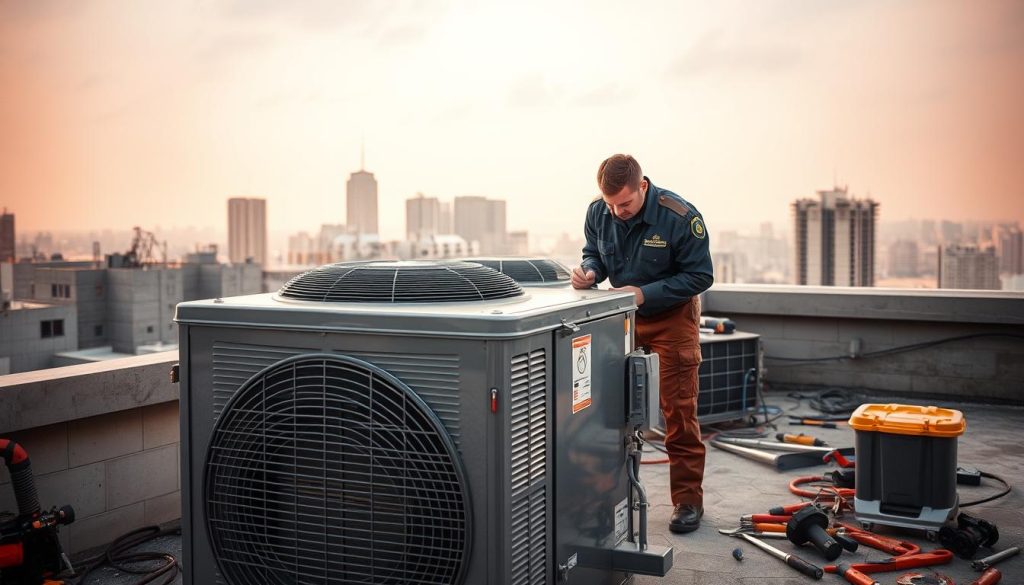
Rooftop Unit (RTU) Repair Specifics
The cost to fix rooftop units (RTUs) can change a lot. This depends on the type of fix and how complex the unit is. RTUs are key parts of commercial HVAC systems. Keeping them in good shape is vital for the comfort and work of building occupants.
RTU Component Repair Costs
Fixing RTUs often means replacing or fixing certain parts. The prices for these repairs can vary a lot:
- Compressor Replacement: $1,000 – $3,500
- Fan Motor Repairs: $300 – $1,000
- Control Board Replacement: $500 – $1,500
- Refrigerant Leak Repairs: $200 – $1,000
Complete RTU Replacement vs. Repair Economics
Choosing to repair or replace an RTU depends on a few things. These include the unit’s age, how much repair is needed, and the cost of a new unit. Usually, if fixing costs more than half of a new unit’s price, it’s better to replace it.
Typical Timeframes for RTU Repairs
The time it takes to fix an RTU can vary. It depends on how complex the problem is and if parts are available. Simple fixes might take a few hours. But more complex repairs or replacements can take days.
Knowing these details helps business owners plan for RTU upkeep. It also helps them make smart choices about their commercial HVAC systems.
Emergency Commercial HVAC Repair Services
Emergency commercial HVAC repair services are very important, especially during busy hours. If your HVAC system breaks down, it can stop your business from running smoothly. This can lead to big losses.
After-Hours and Weekend Service Rates
Emergency HVAC repairs cost more, especially if they happen outside regular hours. The price can change a lot based on who you call, where you are, and what the emergency is.
- After-hours service calls can cost more, sometimes even double the usual price.
- Weekend repairs might cost more because of overtime rates.
- Priority service deals can help lower some of these extra costs.
Emergency Response Timeframes
How fast a service comes to fix your HVAC is very important. Good service providers usually offer:
- Rapid response times, usually within 1-2 hours for emergencies.
- 24/7 availability to fix problems at any time.
- Prioritized scheduling to cut down on downtime.
When Emergency Repairs Are Worth the Premium
Knowing when to choose emergency repairs is key. Go for emergency services if:
- Your business really needs a working HVAC system.
- The breakdown could risk your employees or customers.
- It’s a major system failure that affects your work.
In summary, while emergency commercial HVAC repair services cost more, they’re often worth it. They offer quick help and help keep your business running.
Energy-Efficient Commercial HVAC Repairs
There’s a big push for energy-efficient HVAC repairs in businesses. This is because of environmental concerns and the chance to save a lot of money. Upgrading to energy-efficient HVAC systems is now a top choice for businesses looking to cut costs.
Cost vs. Benefit Analysis of Energy-Efficient Upgrades
Investing in energy-efficient HVAC systems can lead to big savings over time. The initial costs might be higher, but the long-term savings are worth it. This is because energy-efficient systems use less energy and lower utility bills.
- Reduced Energy Consumption: Energy-efficient HVAC systems use less energy, which means lower utility bills.
- Extended Equipment Life: Modern, energy-efficient systems last longer, so you don’t need to replace them as often.
- Environmental Benefits: By using less energy, businesses can also reduce their carbon footprint.
Available Tax Incentives and Rebates for 2025
In 2025, there are tax incentives and rebates for businesses that upgrade to energy-efficient HVAC systems. These can help cover some of the costs, making it easier to switch to energy-efficient systems.
- Federal Tax Credits: Businesses can get tax credits for installing energy-efficient HVAC systems.
- State and Local Rebates: Many states and local governments offer rebates for energy-efficient HVAC upgrades.
- Utility Company Incentives: Some utility companies give incentives to businesses that use less energy.
ROI Timeframes for Efficiency Improvements
The return on investment (ROI) for energy-efficient HVAC upgrades varies. It depends on the type of upgrade, the system size, and the energy-saving technologies used. Generally, businesses can see a return on their investment in 3 to 7 years.
Smart Strategies for Managing Commercial HVAC Repair Costs
Managing commercial HVAC repair costs needs a proactive plan. This includes regular maintenance and making smart choices. By doing so, businesses can cut down on HVAC costs and keep systems running smoothly.
Preventive Maintenance Programs and Their Cost Benefits
Starting a preventive HVAC maintenance program is a smart move. It helps spot problems early, avoiding expensive fixes later. Studies show preventive maintenance can cut repair costs by up to 30%.
How to Get Accurate Quotes from HVAC Contractors
To avoid surprise bills, getting clear quotes from HVAC contractors is key. Ask for detailed quotes that list all repairs, labor, and parts. Comparing quotes from different contractors can help find the best price.
DIY vs. Professional Repairs: What’s Allowed & What’s Risky
Some simple HVAC repairs can be done by the business itself. But, complex issues need a pro. DIY fixes on advanced systems can cause more harm and cost more. It’s wise to call in experts when you’re unsure.
Understanding HVAC Warranties and Service Agreements
It’s important to understand HVAC warranties and service agreements. This means knowing what’s covered by warranties, guarantees, and extended plans.
Manufacturer Warranties
Manufacturer warranties cover parts and sometimes labor for a set time. Knowing what’s covered can save businesses money.
Contractor Workmanship Guarantees
Contractor workmanship guarantees ensure repairs are done right. Look for contractors with strong guarantees.
Extended Service Plans
Extended service plans offer extra protection against future repair costs. They’re especially useful for critical HVAC systems.
Conclusion: Budgeting for Commercial HVAC Repairs in 2025
As we head into 2025, knowing what affects commercial HVAC repair costs is key. Understanding how system size, equipment age, and technician skill impact prices helps. This way, business owners can plan better.
Starting preventive maintenance and looking into energy-efficient upgrades can also help. It’s important to weigh the costs and benefits of these upgrades. Plus, checking out tax incentives and rebates for 2025 is a good idea.
To effectively budget for HVAC repairs in 2025, regular maintenance is a must. Getting accurate quotes from contractors is also crucial. And, thinking about the long-term savings of energy-efficient upgrades is smart. These steps help avoid unexpected costs and keep HVAC systems running well all year.
Staying up-to-date on 2025 HVAC repair costs and using smart budgeting strategies is essential. This way, businesses can keep their spaces comfortable and productive. And, they can keep their maintenance budgets in check.