Experiencing a house fire is very upsetting. Your safety is the most important thing. The Canadian Red Cross says it’s key to wait for the Fire Department’s okay before going back inside.
First, wear protective gear like rubber boots, safety glasses, and a dust mask. This keeps you safe from sharp debris and harmful substances.
Once you’re safe, call your insurance company to start the fire damage insurance process. Also, document the damage for your claim. Having a checklist makes this easier, helping you get through it.
By using a detailed smoke damage repair checklist, you can make sure your home is fixed right.
Safety First: Immediate Steps After a House Fire
After a house fire, your safety is the most important thing. The first steps you take are key to keeping you safe and your home intact.
Waiting for Fire Department Clearance
The Canadian Red Cross says wait for Fire Department clearance before going back into your home. This is to make sure it’s safe and there are no dangers. Waiting for clearance can prevent accidents and injuries.
Assessing Structural Safety
After getting clearance, check if your home’s structure is okay. Look for damage like sagging floors, cracked walls, or weak foundations. Fire can weaken buildings, so be careful.
Health Considerations When Entering a Fire-Damaged Home
When you go back into your home, wear protective gear like rubber boots and safety glasses. This helps protect you from harmful substances like ash, soot, and chemicals. Protective gear is essential for safeguarding your health.
By focusing on safety and taking the right precautions, you can better handle the tough recovery process after a house fire.
Contacting Your Insurance Company
After a fire, it’s key to call your insurance company right away. This first step is important to start the claims process and get the help you need.
What Information to Have Ready
Before you call, make sure you have all the right info. List the damaged items, their serial numbers, and an estimate of their cost. The Canadian Red Cross says this makes the claims process easier.
Understanding Your Coverage
It’s important to know what your insurance covers. Check your policy to see what’s included and what’s not. Usually, homeowner’s insurance covers fire damage to your home and belongings. Knowing this can help you understand what to expect.
Working with Insurance Adjusters
After you file a claim, an adjuster will contact you. They will check the Smoke Damage Repair and figure out how much you’ll get back. Be ready to give them all the details and ask questions. Talking clearly with the adjuster can make the process smoother.
| Task | Description | Timeline |
|---|---|---|
| Notify Insurance Company | Inform them about the fire and start the claims process | Immediately |
| Gather Information | List damaged items, serial numbers, and approximate costs | Within 24 hours |
| Review Policy | Understand what is covered under your insurance policy | Before meeting with adjuster |
Documenting the Damage
It’s important to document fire damage well for insurance claims and restoration. This step helps you get the right compensation for damages. It also makes the restoration process smoother.
Taking Effective Photos and Videos
Take clear and comprehensive photos and videos of all damaged areas. Start with the outside of the property. Then, go inside to document each room well. Make sure to get close-ups of damaged items and structural parts.
Creating an Inventory of Damaged Items
Creating a list of damaged items is key. List all damaged or destroyed items, including their value and when you bought them. This list is crucial for your insurance claim.
| Item | Approximate Value | Purchase Date |
|---|---|---|
| Living Room Furniture | $5,000 | 2018 |
| Kitchen Appliances | $3,000 | 2020 |
Digital Tools for Documentation
Digital tools can make documenting easier. Use apps for managing inventory and assessing damage. They help you organize your photos, videos, and lists well.
Securing Your Property After a Fire
After a fire, it’s key to secure your property to avoid more damage and keep it safe. You need to act fast to protect your home from more harm and security threats.
Temporary Board-Up Services
One important step is to use temporary board-up services. The Canadian Red Cross says it’s crucial to board up broken windows and cover holes in walls and roofs. This stops more damage from weather and intruders.
Preventing Further Damage
It’s also important to prevent more damage. This means covering exposed areas, removing standing water, and making sure the property is dry to stop mold. These actions can greatly lower the chance of more damage.
Security Considerations
Security is another big concern. Securing your property means more than just fixing it physically. It also means making sure it’s safe from intruders. You might need to work with security services or law enforcement to watch over your property.
DIY vs. Professional Smoke Damage Repair
Homeowners often face a big choice when dealing with smoke damage: DIY or call the pros. Knowing the difference is key to fixing the damage right.
Initial Cleanup Steps for Homeowners
For small smoke damage, homeowners can start with simple steps. First, remove loose debris and dust with a soft-bristled brush or a vacuum on low. Wipe surfaces with mild detergent to get rid of soot and smoke. Always wear gloves and a mask to avoid harmful particles.
When to Call the Professionals
DIY works for minor damage, but know when to get help. If the damage is big or you’re not sure what to do, call the experts. ServiceMaster Restore says pros are best for complex smoke damage jobs.
Safety Equipment for DIY Cleanup
If you’re doing the cleanup yourself, make sure you have the right gear. You’ll need gloves, goggles, and a respirator mask to protect against soot and smoke. Also, good ventilation is key to keep the area safe and prevent contamination.
Professional Smoke Damage Assessment
After a fire, it’s important to act fast. A detailed professional smoke damage assessment is the first step. It helps figure out how bad the damage is and how to fix it.
Finding Qualified Restoration Companies
Looking for a good restoration company? Check if they have certifications from groups like the Institute of Inspection, Cleaning and Restoration Certification (IICRC). Companies with IICRC certification know how to handle smoke damage well. Also, read online reviews and ask people you know for recommendations.
What to Expect During a Professional Assessment
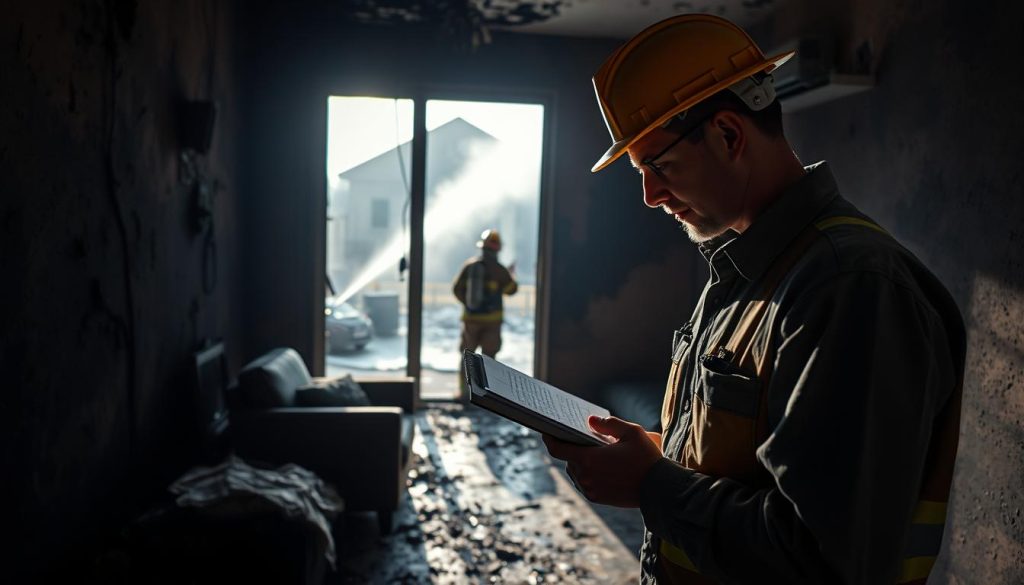
During the assessment, experts will check the damage, spot safety risks, and give a detailed plan for fixing things. They will look at all damaged areas, take notes, and decide on the best cleaning and repair steps. ServiceMaster Restore says this step is key to getting a written plan for fixing your home.
Understanding Quotes and Timelines
After the assessment, you’ll get a quote that shows what work needs to be done, what materials are needed, and when it will be finished. The time it takes can change based on how bad the damage is and when materials are available. Make sure to ask about the quote to understand what you’ll pay and when it will be done.
Comprehensive Smoke Damage Repair: Room-by-Room Checklist
After a fire, fixing your home needs a careful look at each room. This guide will help you fix different parts of your house.
Kitchen and Appliance Restoration
The kitchen is tough to fix after a fire. First, check your appliances and cabinets. Throw away any food and look for damage on countertops and floors. For appliances, see if you can follow the maker’s repair guide or get a pro to help.
Living Areas and Furniture
Living areas get hit hard by smoke, affecting furniture, curtains, and carpets. Begin by taking down and cleaning or swapping out curtains and upholstery. Check if furniture can be fixed or if it’s time for new pieces. For carpets, think about getting them professionally cleaned.
Bedrooms and Clothing
Bedrooms need special care, especially clothes and bedding. Wash or dry clean clothes to get rid of smoke smells. Look at bedding and mattresses to see if they can be saved or need to be replaced.
Bathrooms and Plumbing Considerations
Bathrooms can also get smoke damage, especially near fixtures and pipes. Check pipes for damage and look for smoke on bathroom items. For porcelain and tile, think about getting a pro to clean them.
| Room | Items to Check | Action Required |
|---|---|---|
| Kitchen | Appliances, Cabinets, Countertops | Assess damage, Clean or Replace |
| Living Areas | Furniture, Curtains, Carpets | Clean or Replace |
| Bedrooms | Clothing, Bedding, Mattresses | Wash, Dry Clean, or Replace |
| Bathrooms | Fixtures, Plumbing, Tile | Inspect, Clean, or Replace |
Advanced Odor and Residue Removal Techniques
After a fire, getting rid of smoke smells and residues is key. Specialized methods are needed to make a home like new again. These methods improve air quality and remove smoke’s lasting effects.
Professional Equipment and Methods
Companies like ServiceMaster Restore use top-notch tools for smoke cleanup. They use thermal fogging machines, ozone generators, and hydroxyl generators. These tools help break down and remove smoke particles.
Specialized Cleaning Solutions
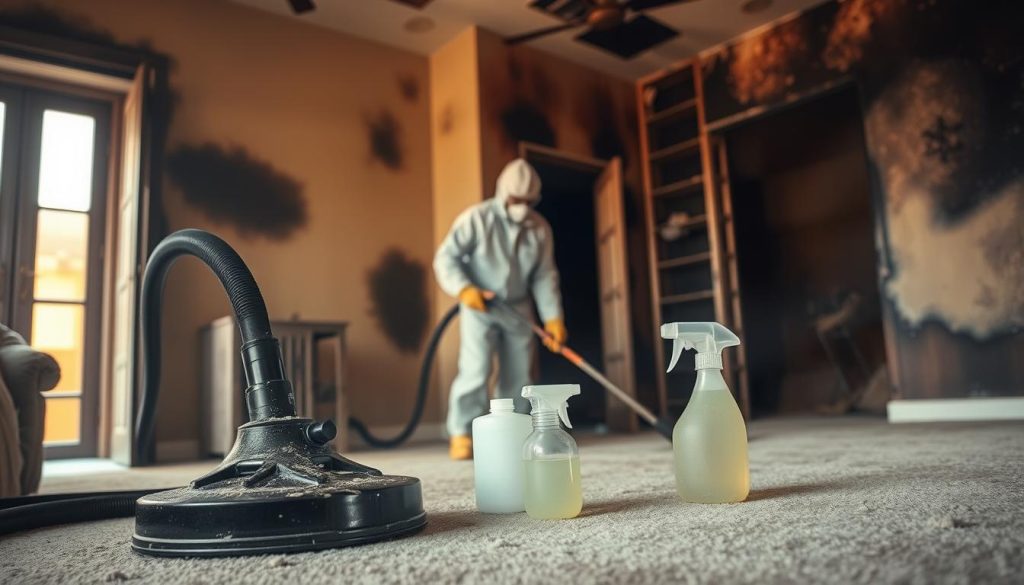
Special cleaning solutions are vital for removing smoke residues. These solutions go deep into materials to lift and remove smoke particles and odors. This step is crucial for removing all smoke traces.
Dealing with Persistent Smoke Odors
Dealing with smoke odors that won’t go away can be tough. Methods like encapsulation and using odor-controlling products work well. Knowing the source of the odor and using the right method is essential for removing it mean Smoke Damage Repair.
| Technique | Description | Effectiveness |
|---|---|---|
| Thermal Fogging | Uses a fogging machine to penetrate surfaces with a cleaning solution. | High |
| Ozone Generators | Produces ozone to break down smoke particles. | High |
| Hydroxyl Generators | Creates hydroxyl radicals to neutralize smoke odors. | High |
| Encapsulation | Seals in odor-causing particles to prevent their release. | Medium to High |
Using these advanced techniques helps restore homes after a fire. It’s important to work with professionals. They have the right tools and knowledge to remove smoke odors and residues effectively.
Working with Restoration Contractors
Homeowners facing fire damage need to know how to work with restoration contractors. The Canadian Red Cross says picking a good contractor is key to a successful fix.
Selecting the Right Contractor
Choosing a contractor with experience in fire damage restoration is crucial. Look for ones certified by reputable groups and with good reviews. Make sure they have the right tools and a clear plan.
Understanding the Restoration Timeline
Knowing the restoration timeline is important. A good contractor will give you a detailed schedule. This lets you plan ahead.
Monitoring Progress and Quality
It’s important to keep an eye on the restoration work. Talk often with your contractor and check the quality. Take photos and notes to track the progress.
Conclusion: Rebuilding Your Life After a Fire
Rebuilding after a house fire is tough, but you can do it. Follow the smoke damage repair checklist in this article to start recovering. It will help you get back on track.
The Canadian Red Cross says rebuilding is key after a fire. Fire damage restoration companies offer great help. Always keep your safety and property’s structure in mind as you rebuild.
Work with insurance, document damage, and secure your property to rebuild. You can clean up yourself or hire pros. The important thing is to act and keep moving forward. With time and effort, you can make your home like new again.