Replacing a garage door spring can seem scary for many homeowners. It’s important to understand the process and safety tips before starting.
If you’re thinking about DIY garage door repair, know that garage door spring replacement is tricky. It involves high tension, so it needs careful handling.
Homeowners should know the risks and challenges of this task. Learning about it helps prepare you for a successful replacement.
Understanding Garage Door Springs and Their Function
Knowing how garage door springs work is key for homeowners. These springs help the garage door open and close smoothly. They balance the door’s weight, making it easy to move.
Types of Garage Door Springs: Torsion vs. Extension
There are two main types of garage door springs: torsion and extension. Torsion springs sit above the door. Extension springs run along the door’s tracks. Knowing which type your door has is important for any repairs.
| Characteristics | Torsion Springs | Extension Springs |
|---|---|---|
| Mounting | Above the garage door | Parallel to the door’s tracks |
| Durability | Generally more durable | Less durable compared to torsion springs |
| Maintenance | Less maintenance required | More prone to wear and tear |
How Springs Counterbalance Your Garage Door
Garage door springs balance the door’s weight, making it easy to open and close. They store energy, which helps the opener work better. This makes the door move smoothly.
Torsion springs work by twisting, while extension springs extend and contract. Good springs are key for a long-lasting garage door system.
Safety Considerations Before Replacement
Before starting garage door spring replacement, it’s key to know the dangers and take safety steps. Replacing garage door springs can be risky, especially with torsion springs under high tension.
Potential Dangers of DIY Spring Replacement
One big risk of DIY garage door spring replacement is getting hurt by flying debris or springs. Torsion springs are tightly wound and can cause serious harm if not handled right.
Safety should always be the top priority when trying this task. Homeowners need to know the dangers, including:
- Severe injuries from springs or debris
- Entanglement or crushing hazards
- Eye injuries from flying parts
Essential Safety Gear and Precautions
To lower these risks, wearing the right safety gear and following precautions is crucial. Some key safety steps include:
| Safety Gear | Purpose |
|---|---|
| Safety Glasses | Protect eyes from flying debris |
| Gloves | Provide grip and protect hands from cuts and abrasions |
| Steel-Toed Boots | Protect feet from heavy objects |
Along with safety gear, homeowners should follow the right steps for spring replacement. This includes releasing tension on torsion springs before removal and using the right tools.
By knowing the hazards and taking safety steps, homeowners can reduce the risks of DIY garage door spring replacement.
Tools and Materials Needed for Garage Door Spring Replacement
Replacing garage door springs needs the right tools and materials. Homeowners must prepare with the correct garage door tools and spring replacement materials. This ensures a smooth and safe process.
Essential Tools for the Job
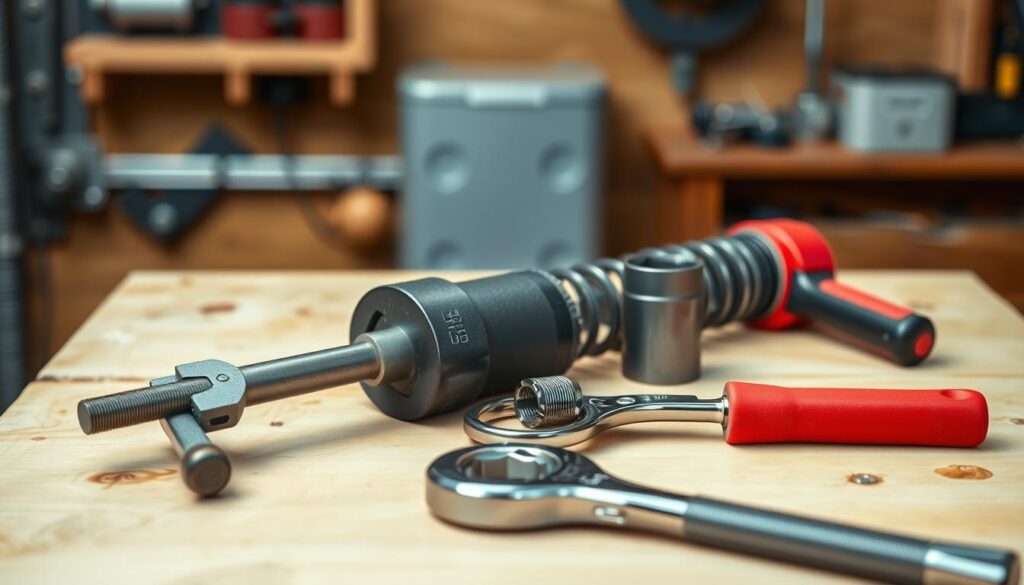
To replace garage door springs, you need specific tools. These include:
- Winding bars for torsion springs
- Pliers and wrenches for handling spring components
- A socket wrench or ratchet for adjusting and removing parts
- C-clamps or locking pliers to secure the door during replacement
- A ladder or step stool for safe access to the garage door springs
Having these garage door tools makes the job easier. It also reduces the risk of injury or damage to the garage door.
Measuring and Purchasing the Correct Replacement Springs
Accurate measuring garage door springs is crucial. You need to know the size, type, and specifications of the springs. Key measurements include:
- The length of the spring
- The diameter of the spring
- The wire size of the spring
- The number of turns or coils
After measuring, you can buy the right spring replacement materials. Make sure to match the specifications closely for a proper fit and function.
By gathering the right tools and materials and measuring accurately, homeowners can make the garage door spring replacement easier.
Step-by-Step Garage Door Spring Replacement Guide
Replacing garage door springs is a big job for homeowners. It needs careful steps from start to finish. This includes getting ready, removing the old springs, and installing the new ones.
Preparing Your Garage Door for Spring Replacement
First, get your garage door ready. Disconnect the opener to avoid accidents. Use clamps or vice grips to keep the door open.
Clear the area around the garage door of clutter and obstacles. This makes the job safer and easier.
Safely Removing the Old Springs
Removing old springs is a careful job. For torsion springs, use a winding bar to unwind them. For extension springs, remove the safety cable and then the spring from the track and bracket.
Installing and Winding New Springs
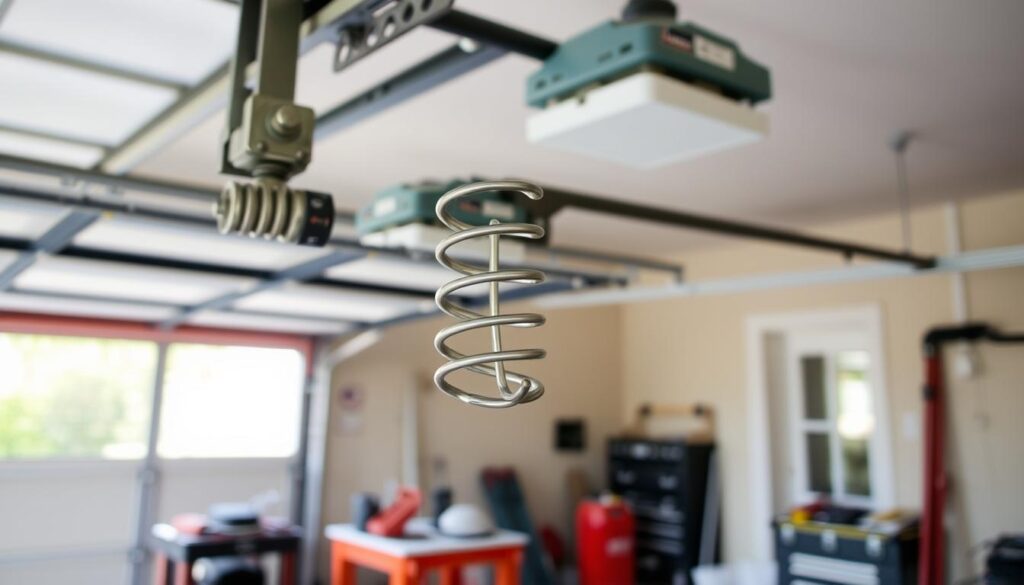
Make sure the new springs fit your garage door right. For torsion springs, wind them as the maker says, usually 1/4 turn for every inch of door height plus a bit more.
Here’s a table for winding torsion springs:
| Door Height (feet) | Initial Turns | Additional Turns |
|---|---|---|
| 7 | 1 3/4 | 1/4 to 1/2 |
| 8 | 2 | 1/4 to 1/2 |
| 9 | 2 1/4 | 1/4 to 1/2 |
Testing and Adjusting the Installation
Test the garage door after putting in the new springs. Make sure it moves smoothly. Check the balance by opening it halfway by hand. It should stay there.
Make sure the door is balanced right and the springs are just right. This keeps your garage door working well and safely.
Common Challenges and Troubleshooting Tips
DIY garage door spring replacement can be tricky, even with the right tools. Homeowners might face problems that make the job harder. Knowing how to fix these issues is key to a successful repair.
Dealing with Stuck or Difficult Components
Stuck or hard-to-move parts are a common problem. This includes rusted parts, worn-out bearings, or tracks that aren’t aligned right. Here’s how to tackle these issues:
- Use a lubricant on stuck parts to help them move better.
- Look for wear on tracks and rollers. Replace them if you find any.
- Make sure the garage door tracks are aligned correctly.
Choosing the right lubricant is important. Use silicone-based or lithium grease lubricants. They last long and work well in different temperatures.
Addressing Balance and Tension Issues
Ensuring the garage door is balanced and has the right tension is another big challenge. If it’s not balanced or has the wrong tension, it can cause problems and even accidents.
- Check the door’s balance by lifting it halfway manually. It should stay up if it’s balanced right.
- Adjust the spring tension as the manufacturer says. This can help get the balance right.
- Test the door after making adjustments. It should open and close smoothly.
Getting the tension right is crucial for your garage door’s safety and efficiency. Wrong tension can wear out the springs and other parts too soon.
By understanding and fixing these common problems, homeowners can do a successful DIY garage door spring replacement. This ensures their garage door works safely and well.
When to Call a Professional for Garage Door Spring Issues
Knowing when to get help for garage door spring problems can save you time and money. It also keeps you safe. While some can fix these issues themselves, others need a pro’s touch.
Signs the Job Is Beyond DIY Capability
Some signs show you need a pro for garage door spring fixes. These include:
- Complex torsion spring systems that need special tools and know-how.
- Garage doors with many springs or hard-to-reach ones.
- Springs that are very tight, which can hurt you if not handled right.
Finding and Hiring a Qualified Garage Door Technician
When looking for a garage door tech, check for these:
- A licensed and insured tech.
- Someone with experience on your garage door system.
- Good customer reviews and ratings.
A skilled garage door tech ensures a safe fix. This gives you peace of mind and might save you from expensive repairs later.
By following these tips, you can decide wisely when to call a pro for garage door spring problems.
Conclusion
Replacing garage door springs can be done by homeowners who are ready and know how. It’s important to understand the types of springs, take safety steps, and use the right tools. This way, homeowners can replace their springs successfully.
A successful garage door spring replacement needs careful planning and attention to detail. It’s also crucial to prioritize safety. While fixing it yourself can save money, knowing when to call a pro is key to avoid risks.
In the end, with the right knowledge and safety measures, homeowners can replace garage door springs on their own. But, if you’re not sure about anything, it’s best to get help from a skilled garage door technician. This ensures a safe and correct installation.