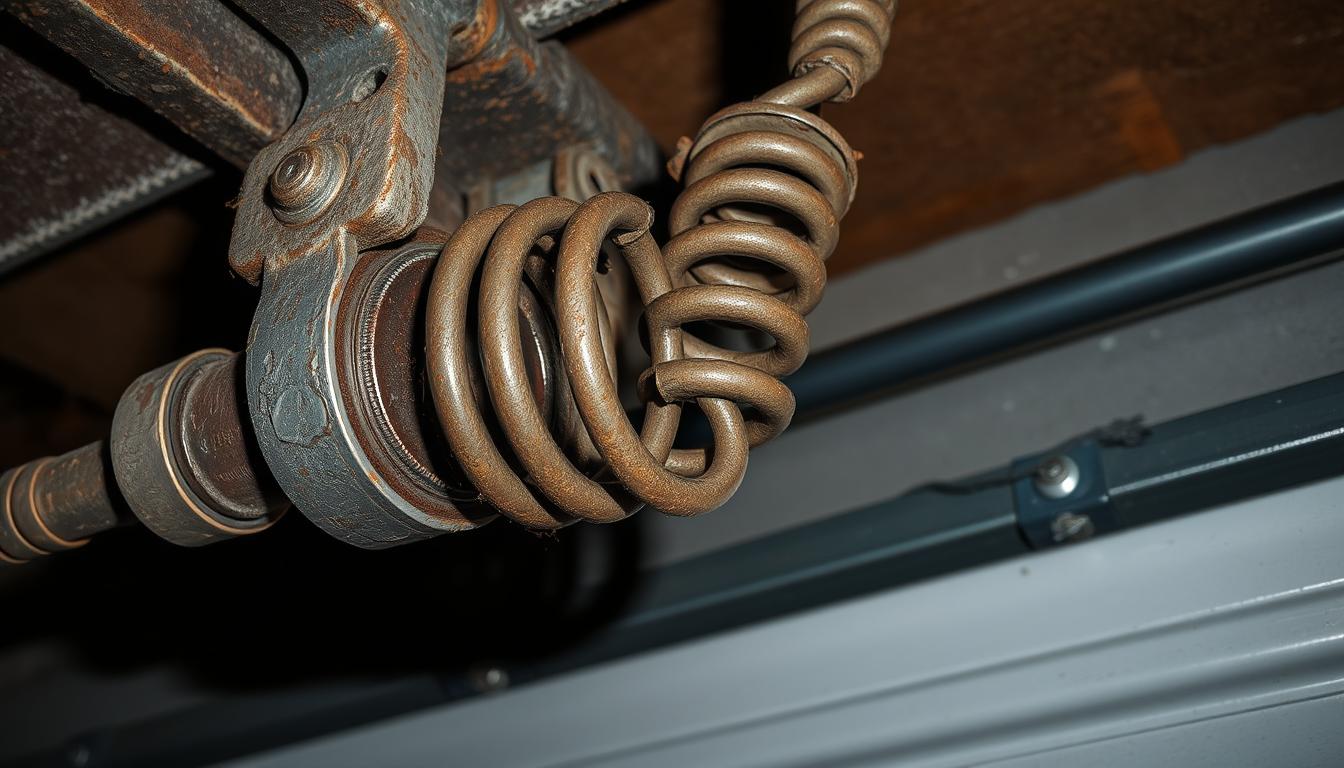
A broken garage door spring is a serious safety risk. It can lead to accidents and injuries. It’s important to know the signs of a broken spring to stay safe.
If a garage door spring breaks, the door can fall down. This can hurt people or pets nearby. Spotting a broken spring is key to avoiding accidents and getting the door fixed quickly.
Knowing the dangers of a broken spring is crucial for homeowners. By recognizing the signs, you can act fast. This helps keep you and your loved ones safe.
Understanding Garage Door Springs and Their Function
Knowing how garage door springs work is key for homeowners. These springs are a vital part of the garage door mechanism. They balance the door’s weight for smooth opening and closing.
Types of Garage Door Springs
There are mainly two kinds of garage door springs: torsion springs and extension springs. Torsion springs are above the door and twist to store energy. Extension springs are on the sides and stretch to store energy.
How Garage Door Springs Work
The springs store energy that helps lift the garage door when opened. When the door closes, the springs are tight. This tension is released as the door opens, making it easier to lift. The springs’ proper function is essential for the door’s smooth operation.
Common Signs of a Broken Garage Door Spring
A broken garage door spring is often the culprit. Knowing the signs of a broken spring is key. Spotting these signs early can prevent more damage and keep you safe.
Visual Indicators of Spring Damage
Spotting a broken spring is easy with a quick look. Look for any gaps or breaks in the spring. If your garage door looks uneven or sags, it might mean a spring is broken.
Operational Problems with Your Door
Having trouble with your garage door? It could be a broken spring. A broken spring can make the door hard to open or close.
| Operational Issue | Possible Cause |
|---|---|
| Difficulty opening the door | Broken spring or worn-out cables |
| Door sags on one side | Broken spring or damaged tracks |
| Door doesn’t close completely | Broken spring or misaligned sensors |
Unusual Sounds When Operating
Strange noises like loud bangs or grinding sounds mean trouble. These sounds often mean the spring has broken. It needs to be replaced to avoid more damage or safety risks.
Being aware of these signs helps you fix garage door problems fast. This ensures your garage door works well and safely.
Safety Precautions Before Inspecting Your Garage Door
When checking your garage door for problems like a broken spring, safety comes first. Looking at a garage door can be risky, especially if it has a broken spring. This could suddenly release a lot of energy.
Required Safety Equipment
Wear protective gear to stay safe while checking your garage door. This includes:
- Safety Glasses: Keep your eyes safe from flying debris or springs.
- Gloves: Help you grip things and protect your hands from cuts.
- Steel-Toed Boots: Keep your feet safe from heavy objects.
Disabling the Garage Door Opener
First, turn off the garage door opener to avoid accidents. You can do this by pulling the release handle on the opener.
Securing the Door in Place
To keep the garage door from falling or moving, secure it. You can:
- Use clamps or locking pliers on the tracks to stop the door from moving.
- Have someone hold the door if it’s not fully locked.
Step-by-Step Garage Door Spring Inspection Process
Checking your garage door springs is key to keeping your garage door working right. Regular checks can spot problems early, before they get big.
Examining Torsion Springs
Torsion springs are a common type found in garage doors. To check them, look for any visible damage.
Checking for Gaps and Breaks
Search for gaps or breaks in the spring. Damage means it might need to be replaced. Use a visual inspection to spot wear.
Testing Spring Tension
Try lifting the garage door by hand to test the spring tension. If it feels too heavy or too light, the tension might need adjusting.
Inspecting Extension Springs
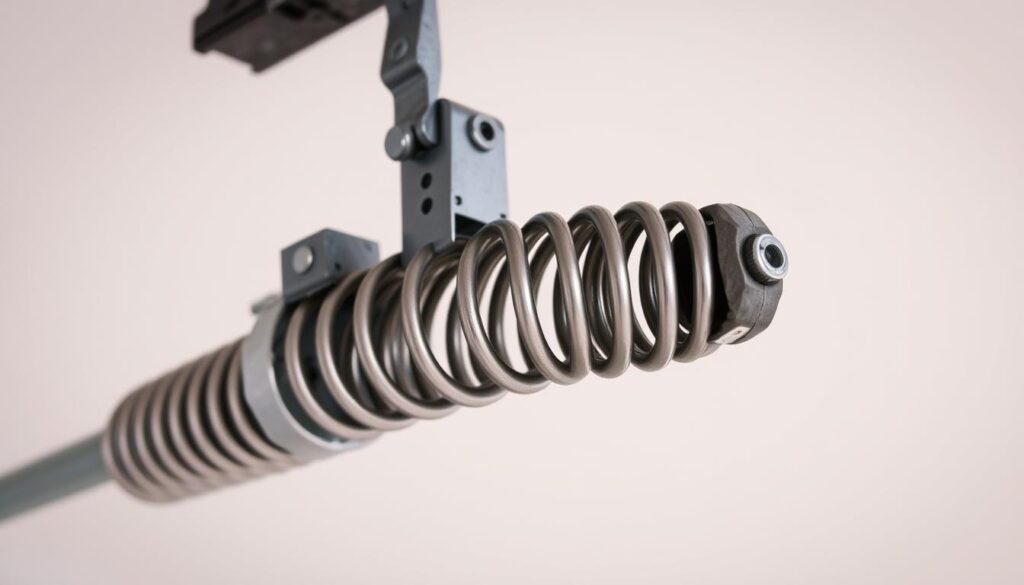
Extension springs also need regular checks.
Looking for Stretching and Deformation
Look for any stretching or deformation. If the spring is out of shape, it won’t work right.
Checking Safety Cables
Make sure the safety cables are in good shape and not damaged. They’re vital for safety.
By following these steps, you can keep your garage door springs in top shape. Regular checks can save you from expensive repairs later.
DIY Garage Door Spring Replacement Guide
Replacing a garage door spring might seem hard, but it’s doable with the right tools and knowledge. First, understand the process and safety steps to avoid injuries or damage to your garage door.
Tools and Materials Needed
To replace your garage door spring, you’ll need a few tools and materials. You’ll need a new spring that matches your old one, winding bars for torsion springs, pliers, a wrench, and safety glasses. Having everything ready will make the job easier.
- Winding bars
- Pliers
- Wrench
- Safety glasses
- New garage door spring
Measuring for the Correct Replacement Spring
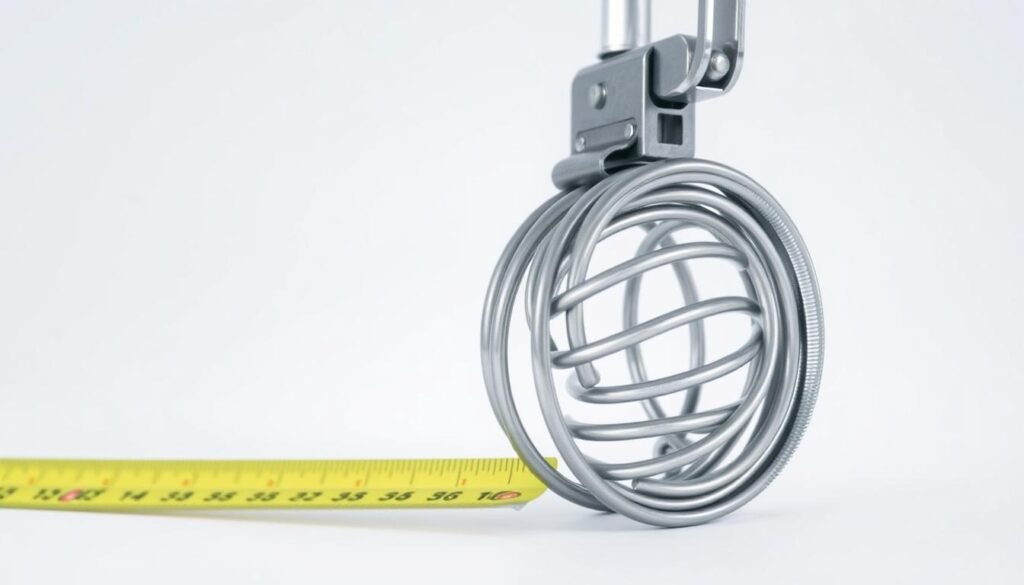
Measuring your old spring correctly is key to finding the right replacement. You need to measure the spring’s length, diameter, and coils. For torsion springs, also note the cone size and winding direction. Accurate measurements are crucial for a proper fit and safe operation.
| Measurement | Description | Importance |
|---|---|---|
| Length | Overall length of the spring | Ensures proper fit |
| Diameter | Diameter of the spring coils | Affects spring tension |
| Number of Coils | Number of coils in the spring | Determines spring strength |
Removing the Broken Spring Safely
When removing a broken garage door spring, safety is top priority. For torsion springs, use winding bars to release tension slowly. For extension springs, remove the safety clip and then take out the spring. Always wear safety glasses and keep your body out of the spring’s path in case it snaps.
Installing and Tensioning the New Spring
After removing the old spring, installing the new one is the reverse of removal. For torsion springs, wind the new spring according to the manufacturer’s instructions. For extension springs, attach the new spring to the track and pulley system, ensuring it’s securely fastened. Proper tensioning is key to the safe and effective operation of your garage door.
By following these steps and taking the necessary safety precautions, you can successfully replace your garage door spring. This will get your garage door working smoothly again.
When to Call a Professional for Garage Door Spring Repairs
DIY garage door spring repairs can save money. But, there are times when a pro is safer and more reliable. Garage door springs are very tense and can hurt you if not fixed right.
Complex Spring Systems and Configurations
Some garage doors have complex spring setups. These need special skills to fix. If your door has many springs or an odd setup, get a pro to fix it right.
Cost Comparison: DIY vs. Professional Repair
DIY vs. pro repair costs differ a lot. DIY might seem cheaper at first. But, a bad fix can cause more damage and cost more later.
| Repair Type | Average Cost | Potential Risks |
|---|---|---|
| DIY Repair | $50-$200 | High risk of injury, potential for further damage |
| Professional Repair | $200-$500 | Low risk of injury, warranty on work |
Finding a Qualified Garage Door Technician
When you need a pro, find a skilled garage door tech. Look for certified ones with good reviews.
Knowing when to call a pro for garage door spring repairs keeps your door safe and working well.
Preventative Maintenance for Extending Garage Door Spring Life
Regular maintenance is key to extending the life of your garage door springs. It also prevents costly repairs. By following a few simple practices, you can keep your garage door running smoothly and safely.
Recommended Inspection Schedule
Check your garage door springs at least once a month. Look for signs of wear or damage. Check for rust, corrosion, or any visible gaps in the springs.
Proper Lubrication Techniques
Lubricate the springs and other moving parts regularly. This reduces friction and prevents wear. Use a silicone-based lubricant to keep the springs working smoothly.
| Maintenance Task | Frequency | Benefits |
|---|---|---|
| Inspect Springs | Monthly | Early detection of issues |
| Lubricate Springs | Every 3 months | Reduces friction and wear |
| Balance and Adjust | Every 6 months | Ensures smooth operation |
Balancing and Adjustment Tips
Regularly check the balance of your garage door. Make adjustments as needed. A properly balanced door reduces strain on the springs and other components.
By following these preventative maintenance tips, you can extend the life of your garage door springs. This ensures your garage door operates safely and efficiently.
Conclusion
A broken garage door spring can cause a lot of trouble and even be dangerous. Knowing the signs of a broken spring is key. Regular maintenance helps keep your garage door working well and safely.
Checking and maintaining garage door springs often is vital. It helps prevent accidents and makes your garage door last longer. By following the tips in this article, you can spot problems early.
Keeping your garage door spring in good shape is important. Being proactive with maintenance and fixing issues quickly helps avoid expensive repairs. This way, your garage door will keep working smoothly.