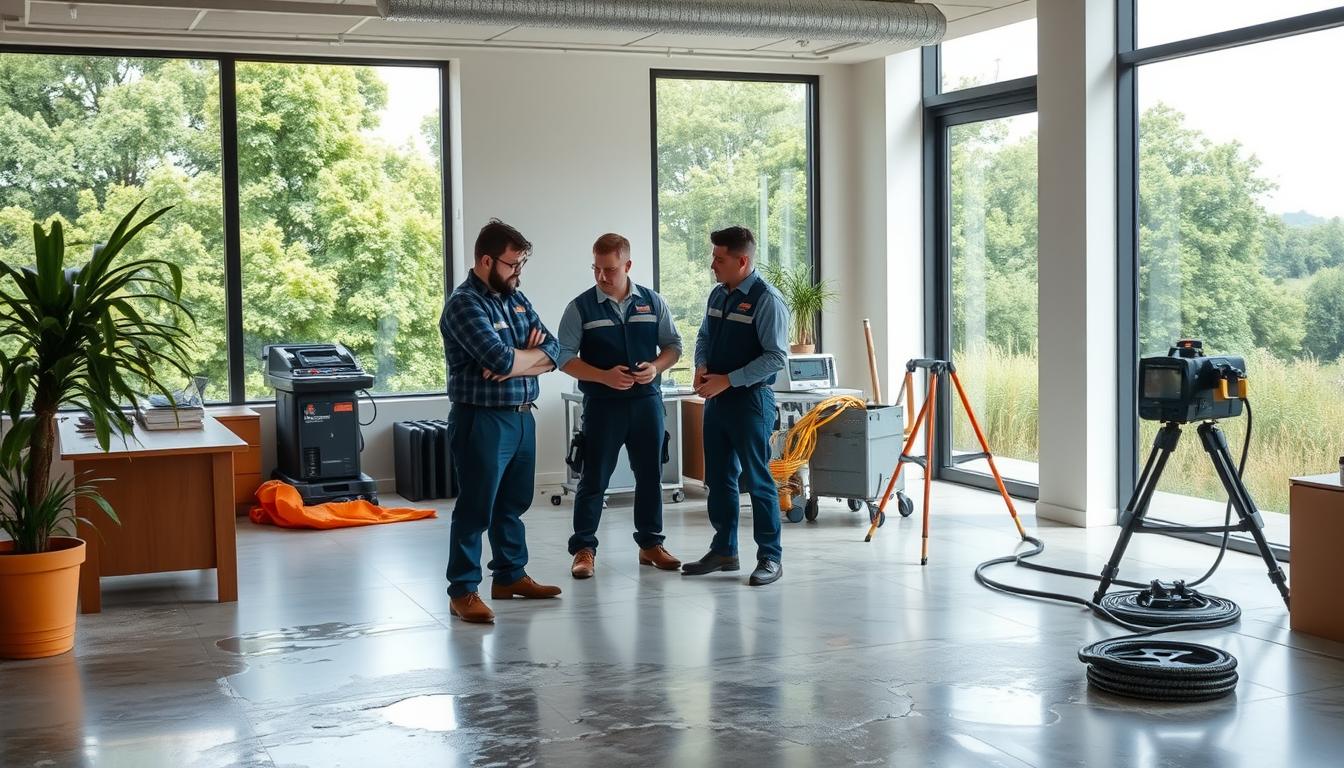
When disaster hits, having top emergency water damage services is key. Whether it’s a burst pipe or a natural disaster, the right water restoration companies can be a game-changer.
Companies like SERVPRO, PuroClean, and AdvantaClean are leaders in water damage repair. Picking the right contractor is crucial for a quick and effective fix.
Choosing a trusted service means your property will be fixed right. With the right skills, the repair can be done fast, cutting down on lost time and money.
Top Water Damage Restoration Companies in the USA for 2025
Leading water restoration companies in the USA are raising the bar for service and quality in 2025. With more natural disasters and water accidents, the need for expert water damage repair is higher than ever.
National Water Restoration Leaders
National water restoration leaders have the skills and resources for big water damage jobs. Companies like SERVPRO and PuroClean are known for their wide range of services. These include water removal, mold cleanup, and rebuilding.
| Company | Services | Coverage |
|---|---|---|
| SERVPRO | Water removal, mold remediation, reconstruction | National |
| PuroClean | Water damage restoration, mold remediation, biohazard cleanup | National |
| AdvantaClean | Water damage restoration, mold remediation, HVAC cleaning | Regional with national capabilities |
Regional Specialists Worth Considering
While big companies have their perks, local specialists offer more tailored service and know the area well. They are ready to tackle water damage in their region.
- Local restoration companies usually respond faster and are more flexible.
- They might charge less because they have lower costs.
- Local experts understand local building rules and codes better.
When picking a water damage restoration company, think about both big names and local experts. Look at their services, reach, and reputation. This way, you can choose the best fit for your needs.
Water Damage Repair: Understanding the Process and Services
Knowing how water damage repair works is key to fixing it right. This process includes many important steps. These steps must be done quickly and by experts to fix the damage and get properties back to normal.
Types of Water Damage Services Available
Water damage services cover a lot, like removing water, drying, and rebuilding. Professional water damage repair services also tackle mold, which can grow fast after water damage. The services needed depend on the damage’s extent and the property’s specific needs.
- Water extraction and removal
- Drying and dehumidification
- Cleaning and sanitizing
- Mold remediation
- Reconstruction and restoration
Professional vs. DIY Approaches
Some might try fixing water damage themselves, but it’s risky. Professional water damage repair services have the right tools, know-how, and experience. They ensure properties are fixed safely and well.
Experts can find and fix hidden damage, avoiding future problems like weak structures or mold. They also help with insurance claims, making recovery easier for property owners.
How to Choose the Right Water Damage Repair Contractor Near You
Finding a good water damage repair contractor is key to fixing your property. When water damage hits, you need someone who can fix it fast and well.
Essential Qualifications to Look For
When looking for a contractor, check these important qualifications:
- Licensing and Certification: Make sure they have the right licenses and certifications, like the IICRC.
- Experience: Choose someone with lots of experience in water damage fixes.
- Insurance Coverage: Check if they have insurance to protect you and your property.
Questions to Ask Before Hiring
Before you hire, ask these questions:
- What experience do you have with water damage fixes?
- Can you show me examples of your work?
- How fast can you respond to emergencies?
- Do you have the right tools and technology for the job?
Reading Reviews and Checking References
Reading reviews and checking references is vital. Look for reviews online and ask for references to see how good Water Damage Repair near you.
| Criteria | What to Look For | Why It Matters |
|---|---|---|
| Response Time | Contractors who offer 24/7 emergency services | Quick response can minimize damage |
| Certifications | IICRC certification, other relevant industry certifications | Ensures professionalism and adherence to industry standards |
| Customer Reviews | Positive reviews on reputable platforms | Indicates reliability and quality of work |
By looking at these criteria, you can choose the best contractor. This ensures your water damage fix is done right and fast.
Emergency Water Damage Services: What to Do After a Flood or Leak
Dealing with a flood or leak in your home can be stressful. Knowing what to do next is key to reduce damage. Water damage can cause expensive repairs if not fixed quickly.
Immediate Steps to Take
Act fast when you find water damage. Here are the first steps:
- Turn off the main water supply to stop more damage.
- Switch off the electricity to avoid electrical shock or hazards.
- Remove valuable items from the affected area to prevent damage.
- Document the damage with photos or videos for insurance purposes.
When to Call Emergency Services
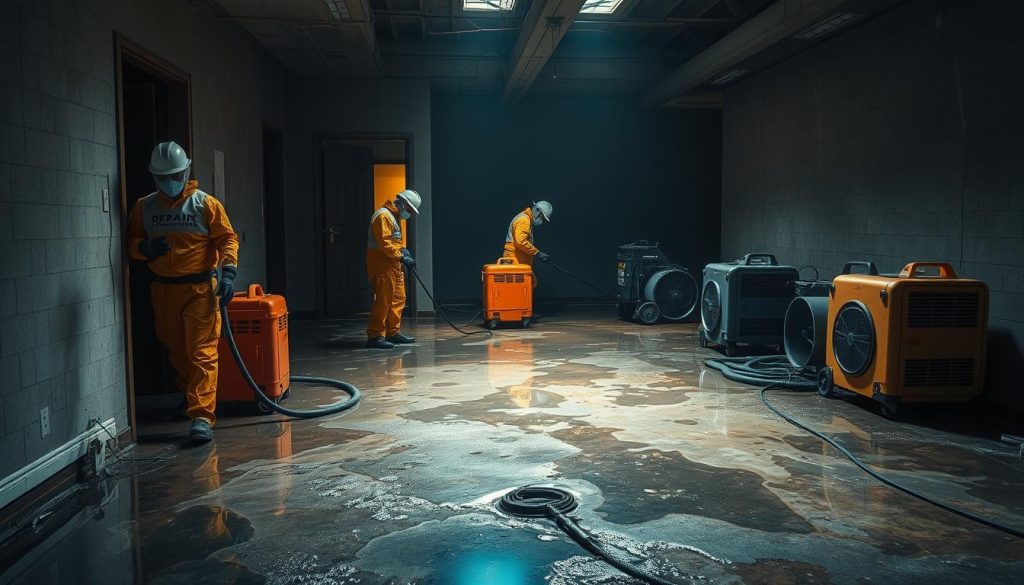
Know when to call emergency water damage repair services. Call them if:
- You have a lot of water damage that could harm your home’s structure.
- The water is contaminated (e.g., from a sewage backup or floodwater).
- You’re not sure how to safely clean up and fix the damage.
Emergency services can offer flood restoration near me solutions. They help you find local experts to quickly fix the damage.
Documenting Damage for Insurance Claims
Documenting damage is key for insurance claims and planning repairs. Make sure to:
- Take clear photos and videos of all damaged areas and items.
- Keep receipts for any expenses related to the damage and repair.
- Record the date and time of the incident and any subsequent damage.
Whether it’s a roof leak or basement flooding repair, a detailed record supports your insurance claim. It helps you recover more efficiently.
Water Damage Restoration Costs in the USA: What to Expect in 2025
In 2025, knowing the costs of water damage repair is key. Water damage can happen for many reasons like natural disasters or broken appliances. It’s important for homeowners to understand these costs.
Average Cost Breakdown by Service Type
The cost of fixing water damage varies by service. Here’s a look at average costs for different services:
| Service Type | Average Cost |
|---|---|
| Water Extraction | $200 – $500 |
| Drying and Dehumidification | $300 – $1,000 |
| Cleaning and Sanitizing | $200 – $1,000 |
| Repair and Restoration | $1,000 – $5,000 |
The total cost for fixing water damage can be from $2,000 to $10,000 or more. This depends on how bad the damage is.
Insurance Coverage for Water Damage
It’s important to know about insurance for water damage repair. Most homeowner insurance covers sudden water damage. But, how much it covers can vary.
- Check your policy to understand what is covered.
- Document the damage thoroughly for insurance claims.
- Consult with your insurance provider to determine the coverage.
Financing Options for Major Repairs
For big damage, you might need financing. Here are some common options:
- Home equity loans or lines of credit.
- Personal loans or credit cards.
- Government assistance programs for disaster-related damage.
It’s important to look into these options. Choose the one that works best for your finances.
Basement and Ceiling Water Damage: Signs, Causes & Professional Fixes
Spotting water damage early in basements and ceilings is key to avoiding big repair bills. Water damage can cause structural problems, mold, and other issues that cost a lot to fix.
Identifying Water Damage in Basements
Basement water damage shows up as damp walls, musty smells, or water getting in. Common causes include poor drainage, foundation cracks, and heavy rain. It’s important for homeowners to check their basements for signs like:
- Water stains or discoloration on walls and floors
- Mold or mildew growth
- Damp or wet basement air
Spotting damage early can help lessen the problem and avoid more issues.
Ceiling Water Damage Assessment
Ceiling water damage is serious and often comes from roof or upper floor leaks. Signs include water stains, sagging ceilings, and peeling paint. To check for ceiling damage, look for:
- Water droplets or dripping water
- Stains or discoloration on the ceiling
- A soft or sagging ceiling surface
Acting fast is crucial to stop more damage and safety risks.
Professional Remediation Techniques
Fixing water damage needs several steps, like removing water, drying, and restoring. Experts use special tools to dry areas and stop mold. The fixing process usually includes:
| Remediation Step | Description |
|---|---|
| Water Extraction | Removing standing water using pumps and vacuums |
| Drying | Using industrial fans and dehumidifiers to dry the area |
| Restoration | Repairing or replacing damaged materials and structures |
Getting professionals to fix water damage ensures it’s done right, lowering the chance of future problems.
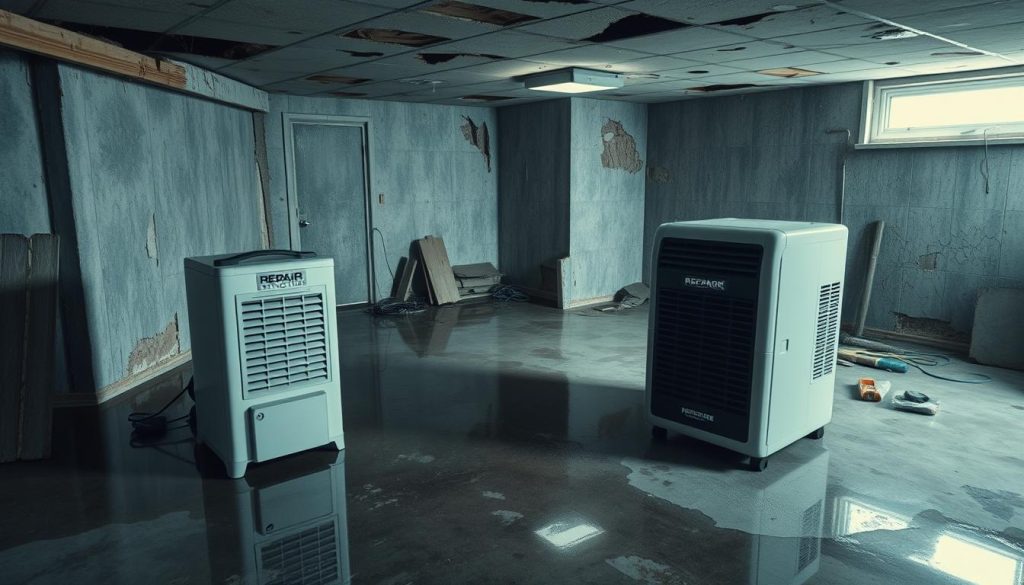
In summary, ignoring basement and ceiling water damage can lead to big problems. Knowing the signs, causes, and professional fixes helps homeowners protect their homes and avoid expensive repairs.
Repairing Different Materials After Water Damage
When water damage happens, knowing how to fix and restore different materials is key. Water can harm many parts of your home, like floors, walls, and personal items. It’s important to use the right method for each material and the level of damage.
Floor Restoration Techniques
Fixing floors after water damage needs different steps for each type. Hardwood floors need drying to avoid warping or cracking. Sometimes, you might need to replace boards. Carpeted floors often need to be replaced, especially if the water was dirty.
Tile and laminate floors can usually be dried and fixed. But, you might need to check the grout and underlayment.
Key steps in floor restoration include:
- Drying the floor thoroughly
- Assessing damage to the subfloor
- Cleaning or replacing flooring material as needed
- Treating for mold and mildew
Wall and Drywall Repair Methods
Walls and drywall can get badly damaged by water, needing more than just a quick fix. First, find and fix the leak. Then, dry the area and replace any damaged drywall. Make sure to treat for mold before putting in new drywall.
For painted walls, check if the paint is still good. If not, you might need to strip and repaint it.
| Material | Assessment | Repair Method |
|---|---|---|
| Drywall | Check for soft spots and mold | Cut out damaged sections, treat for mold, and replace |
| Wood Paneling | Inspect for warping and discoloration | Dry thoroughly, replace warped panels |
| Painted Walls | Evaluate paint condition | Strip old paint, treat for mold, repaint |
Furniture and Belongings Salvage
Getting furniture and personal items back after water damage is tough but doable. The key is to act fast and check the damage well. Upholstered furniture might need professional cleaning or fixing. Wooden furniture can often be dried and refinished.
Personal items like documents and photos need quick attention to stop further damage.
Tips for salvaging belongings:
- Remove and dry items promptly
- Clean items gently to prevent further damage
- Consider professional restoration for valuable or sentimental items
- Document items for insurance purposes
Home Water Damage repair Prevention and Maintenance Checklist
Preventing water damage is simple with a few steps. Regular checks help spot problems early. This keeps your home healthy and comfy.
Seasonal Inspection Guidelines
Seasonal checks are key to keeping your home safe. Here’s what to do:
- Look at your roof for damage or missing shingles after bad weather.
- Check gutters and downspouts for blockages and make sure they’re attached right.
- Check plumbing for leaks or water damage.
- Look for moisture in basements or crawlspaces.
Early Warning Signs of Water Issues
Knowing early signs of water problems helps fix them fast. Watch for these:
- Unexpected high water bills might mean a leak.
- Water stains or discoloration on walls or floors are bad signs.
- Warped floors could mean water damage.
- Mold or mildew in moist areas is a warning.
Smart Home Water Detection Systems
Smart water detection systems add extra protection. They catch leaks early and alert you. Benefits include:
- They spot leaks fast to avoid big damage.
- They can turn off water to stop more damage.
- They send alerts so you can act quickly.
By following these tips and staying alert, you can keep your home safe from water damage.
Conclusion: Protecting Your Home from Future Water Damage
Protecting your home from water damage starts with being proactive. Knowing the risks and taking steps to prevent damage can save your property. This way, you avoid expensive repairs.
Regular maintenance is crucial for water damage repair. Check your home’s plumbing, appliances, and roof often. This helps catch problems early, before they get worse.
Smart water detection systems are a good investment for home protection. They alert you to water damage early. This lets you act fast to reduce damage.
By following the advice in this article and staying alert, you can lower water damage risks. This keeps your home safe and secure for many years. It also boosts your water damage protection.