Moisture is a big problem for homeowners, especially in the crawl space area. Water can cause wood rot and mold, weakening beams and floors.
Too much moisture can harm a home’s structure. It’s important to fix this issue quickly. Homeowners can control moisture, get rid of mold, and fix sagging floors. Knowing the causes helps find good DIY solutions for a safe home.
Keeping moisture under control and fixing sagging floors is key to a home’s health. This article offers a detailed guide on DIY crawl space repair. It focuses on solving common problems effectively.
Why Crawl Space Moisture Is a Big Problem for Homeowners
Crawl space moisture is a big problem for homeowners. It can cause a lot of damage if not fixed. It’s important to know how moisture gets in and the harm it can do.
How Moisture Enters Your Crawl Space
Moisture can get into your crawl space in several ways. This includes groundwater, rainwater, and leaks from plumbing. Bad drainage and ventilation make things worse. This leads to mold growth and wood rot.
Long-term Damage to Your Home’s Structure
Moisture can damage your home’s structure over time. Wood rot can weaken floor joists and beams, causing floors to sag. It can also harm the foundation, leading to expensive repairs.
Impact on Indoor Air Quality and Energy Bills
Crawl space moisture can also harm your indoor air quality. Mold growth can spread spores, making breathing harder. Also, a damp crawl space makes your heating and cooling systems work harder. This can increase your energy bills.
| Issue | Consequence | Solution |
|---|---|---|
| Crawl Space Moisture | Mold Growth, Wood Rot | Improve Ventilation, Fix Leaks |
| Poor Drainage | Water Accumulation | Install Drainage System |
| Inadequate Ventilation | Increased Humidity | Install Vents or Dehumidifier |
Identifying Mold Growth in Your Crawl Space
Crawl spaces are perfect for mold because they are damp and dark. Mold needs moisture and food to live. So, crawl spaces often have the right conditions.
Visual Signs and Smell Indicators of Mold
Finding mold in your crawl space can be hard. But, there are clear signs. Look for black spots or patches on walls and floors. A musty smell is also a sign of mold.
Health Risks Associated with Crawl Space Mold
Mold in crawl spaces can harm your health. It can cause breathing problems and allergies. It’s important to deal with mold quickly to avoid these issues.
Common Types of Crawl Space Mold and Their Dangers
Many molds are found in crawl spaces, like Aspergillus, Penicillium, and Stachybotrys chartarum (black mold). Each type can cause different health problems. Knowing the type helps in fixing the problem.
Knowing the signs of mold and acting fast can keep you healthy. It also saves money on repairs. Keeping your crawl space clean is essential.
What Causes Sagging Floors Above Crawl Spaces
Crawl spaces are key to a home’s stability. Sagging floors can signal deeper problems. They’re not just about looks; they point to serious issues.
Moisture-Related Structural Deterioration
Moisture is a big cause of sagging floors. When crawl spaces get wet, it can damage the wood. This weakens the floor’s support, leading to sagging or uneven floors.
Inadequate Support and Foundation Settlement
Not enough support in crawl spaces can also cause floors to sag. If floor joists lack support or if the foundation settles, floors can become uneven. Foundation settlement happens when soil shifts, causing parts of the foundation to sink.
Warning Signs You Shouldn’t Ignore
Watch for signs that sagging floors are serious. Look out for:
- Visible sagging or unevenness in the floors
- Cracks in walls or ceilings
- Doors that stick or are difficult to open
- Visible signs of moisture or water damage in the crawl space
Spotting these signs early can save you from bigger, more expensive problems later.
Essential Tools and Safety Gear for DIY Crawl Space Repair
To do a DIY crawl space repair safely and well, you need the right tools and safety gear. The right tools help you fix things and keep you safe from accidents.
Required Tools for Different Repair Projects
The tools you need depend on the repair job. You’ll need a flashlight or headlamp, a tape measure, and a utility knife. For bigger jobs, you might also need a pry bar, hammer, and saw.
Personal Protective Equipment for Crawl Space Work
Wearing the right protective gear is key to staying safe in the crawl space. You’ll need gloves to protect your hands, goggles for your eyes, and a dust mask or respirator to keep dust and mold out of your lungs.
Preparing Your Work Area for Safe Access
Before you go into the crawl space, make sure it’s clear and safe. Open vents or use fans to improve air flow. And don’t forget to have a first aid kit ready.
| Tool/Safety Gear | Purpose |
|---|---|
| Flashlight/Headlamp | Illumination |
| Gloves | Hand protection |
| Goggles | Eye protection |
| Dust mask/Respirator | Respiratory protection |
How to Dry Out a Wet Crawl Space: Step-by-Step Guide
Drying out a wet crawl space is key to keeping your home strong and the air clean. Too much moisture can cause mold, rot wood, and harm your foundation.
Identifying and Eliminating Water Sources
The first thing to do is find and fix any water leaks. This could be from pipes, bad drainage, or water coming through walls. Check your crawl space well to see where the water is coming from.
Removing Standing Water and Wet Materials
After stopping the leak, use a wet/dry vacuum or pump to get rid of standing water. Throw away any wet stuff like insulation or damaged wood. They can grow mold and mildew.
Using Fans and Dehumidifiers Effectively
To dry the crawl space, use fans for better air flow and dehumidifiers to lower moisture. Put fans to move air all over, and dehumidifiers where it’s driest.
Monitoring Moisture Levels During Drying
Keep an eye on moisture with a hygrometer to see if it’s drying right. This lets you change your plan if needed.
Addressing Exterior Drainage Problems
To stop water problems later, fix any drainage issues outside. This might mean cleaning gutters and downspouts, changing the soil slope, or getting a French drain.
By doing these steps, you can dry out your wet crawl space and protect your home from more damage.
DIY Mold Remediation: Safely Cleaning Crawl Space Surfaces
Cleaning crawl space surfaces with mold is key to avoid health issues and damage. You need a good cleaning plan and the right steps to remove mold. Use the EPA’s guide to mold cleanup for safe removal methods.
Effective Cleaning Solutions for Different Surfaces
Each surface in your crawl space needs its own cleaning method. For example, wood surfaces work well with bleach and water. But, concrete surfaces might need a special cleaner. Always pick the right cleaner to avoid harming the surface.
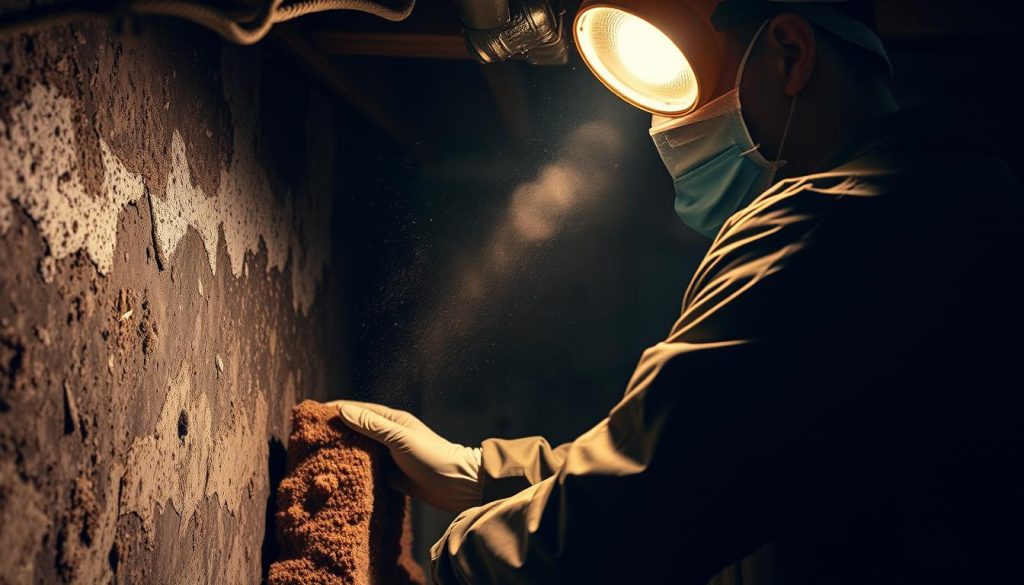
Step-by-Step Mold Removal Process
The mold removal process has important steps. First, make sure the area is well-ventilated and wear protective gear. Then, get rid of any standing water and wet stuff. After that, use your chosen cleaner, scrub well, and rinse.
- Identify and eliminate the source of moisture.
- Remove and dispose of contaminated materials.
- Clean the area with a suitable cleaning solution.
Proper Disposal of Contaminated Materials
It’s vital to dispose of moldy materials right to stop mold spores from spreading. Put all moldy stuff in bags and follow local rules for disposal.
Treating Wood Surfaces to Prevent Regrowth
After cleaning, treat wood to stop mold from coming back. You can use a mold-inhibiting coating or make sure the wood is dry before putting insulation or covering back.
When to Consider Professional Mold Testing
If you’re not sure how much mold there is or if it’s a big area, get a pro for mold testing. Experts can check it out and tell you the best steps to take.
How to Reinforce Sagging Floor Joists and Beams
Reinforcing sagging floor joists and beams is key to keeping your home stable. If you ignore sagging floors, they can cause bigger problems.
Assessing Structural Damage Severity
First, check how bad the damage is. Look for moisture, mold, and damage in the crawl space. Also, check for wall cracks, uneven floors, and sagging joists.
Sistering Joists: Materials and Techniques
Sistering joists is a method to strengthen sagging joists. You add a new joist next to the old one for more support. You’ll need lumber, screws, and nails that match the joists.
Installing Support Columns and Adjustable Jacks
Adding support columns and adjustable jacks is also important. They help support the structure and spread the weight evenly. Check out Basement Systems’ explanation of crawl space support jacks.
Calculating Proper Load Distribution
When putting in support columns, figuring out the load is key. This makes sure the weight is spread right, avoiding more damage.
Leveling Techniques for Uneven Floors
To level uneven floors, use adjustable jacks to lift them. This needs careful planning and doing to get it right.
By taking these steps, homeowners can strengthen their sagging floor joists and beams. This keeps their home stable and safe.
Complete Crawl Space Repair: Installing a Vapor Barrier
Installing a vapor barrier is key to keeping your crawl space dry. It stops water vapor from getting in, which helps avoid mold and damage to your home’s structure. You can also follow This Old House’s vapor barrier tips.
Selecting the Right Vapor Barrier Materials
It’s important to pick the right material for your vapor barrier. Look for thick, durable plastic sheets (10-20 mils) that won’t tear or puncture easily. Some top choices include:
- Polyethylene plastic sheets
- Reinforced polypropylene
Step-by-Step Installation Process
To put in a vapor barrier, just follow these steps:
- First, clean out the crawl space of any debris or blocks.
- Measure the crawl space to figure out how much material you’ll need.
- Then, cut the vapor barrier to the right size.
- Finally, lay it down on the crawl space floor, making sure it covers everything.
Sealing Techniques for Maximum Protection
Sealing the vapor barrier right is key to its success. Here’s how to do it:
Extending Barriers to Crawl Space Walls
The vapor barrier should go up the walls of the crawl space. This makes sure moisture can’t get behind the barrier.
Securing and Overlapping Seams Properly
When sealing seams, overlap them by at least 6 inches. Use tape or adhesive to keep them tight. This stops moisture from getting in.
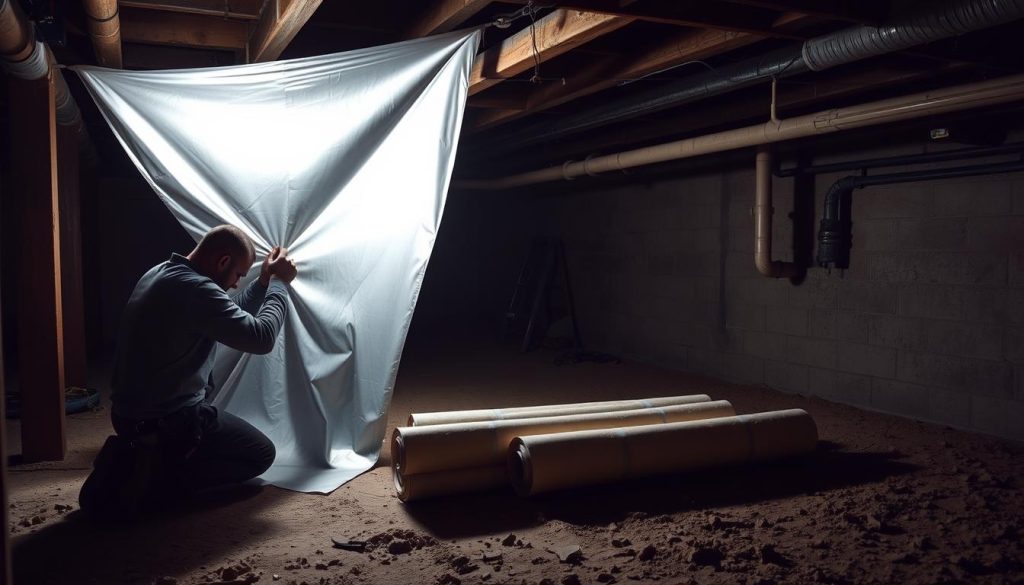
By following these steps and tips, homeowners can successfully install a vapor barrier. This completes their crawl space repair and encapsulation project.
When to Add Ventilation or a Dehumidifier for Better Airflow
Many homeowners forget about crawl space ventilation. But it’s key for a dry, healthy home. Good airflow stops moisture buildup, which prevents mold and damage. Choosing an Energy Star-rated dehumidifier improves performance and efficiency.
Evaluating Your Crawl Space Ventilation Needs
Check for moisture signs like dampness, mold, or musty smells. See if your crawl space has enough vents and if they work. Think about your climate, soil, and if you have a vapor barrier.
Types of Ventilation Systems for Crawl Spaces
There are many ventilation options for crawl spaces. Passive vents use natural airflow, while powered vents have fans. The right choice depends on your crawl space’s layout and needs.
Selecting and Installing a Crawl Space Dehumidifier
A dehumidifier is great for controlling crawl space humidity. Pick one based on your crawl space size, humidity level, and energy efficiency. Make sure it’s installed right for best results.
Maintaining Optimal Humidity Levels
Keep an eye on your crawl space’s humidity. Use a hygrometer to check levels, aiming for 30% to 50%. Adjust your dehumidifier to keep this range.
Energy-Efficient Ventilation Solutions
Choose energy-saving ventilation to save money and keep your crawl space healthy. Solar vents or energy-recovery systems are good choices. They offer effective ventilation without using a lot of energy.
When to Call a Professional for Crawl Space Repair
Not all crawl space problems can be fixed by yourself. Sometimes, you need a professional. Knowing when to call for help is key.
Recognizing Issues Beyond DIY Capabilities
Some problems are too big for DIY fixes. These include:
- Extensive mold growth
- Significant structural damage
- Severe water intrusion
These need special tools and skills to fix right.
Finding Qualified Crawl Space Specialists
To find a good professional, do this:
- Check for relevant certifications and licenses
- Read reviews and ask for references
- Verify insurance coverage
Choosing a qualified expert means repairs are done right and safely. Check reviews on Yelp for crawl space repair services near you.
Understanding Professional Repair Costs in 2025
Professional crawl space repair costs vary. It depends on the damage and services needed. On average, expect to pay between $1,000 and $5,000 for full repairs. Compare quotes through Angi’s crawl space repair listings.
Conclusion
Keeping your crawl space in good shape is key for a safe and healthy home. By following the tips in this article, you can fix DIY crawl space problems. This includes issues like moisture, mold, and sagging floors.
A well-kept crawl space stops structural damage and boosts indoor air quality. It also cuts down on energy bills. Regular checks and quick fixes can save you from big expenses later.
For a quick summary on crawl space repair, remember a few important steps. First, find and fix water leaks. Next, get rid of mold. Lastly, strengthen any sagging floor joists. With the right tools and safety gear, DIY crawl space care is doable.
By actively maintaining your crawl space, you make your home healthier and avoid expensive fixes. Knowing how to repair your crawl space is crucial for homeowners. With the right information, you can handle these tasks confidently.